

Food storage in plants is carried out by specialized parts such as roots, stems, leaves, seeds, and fruits. These parts store food for growth, survival, and reproduction.
Food Storage in Plants
Food storage in plants involves the collection and saving of extra food made during photosynthesis. Plants use this stored food later when they need energy for growth, seed germination, flowering, or survival in poor conditions.
The stored food is usually in the form of starch, sugars, oils, or proteins. Different plant parts store food in different ways.
Main Plant Parts That Store Food
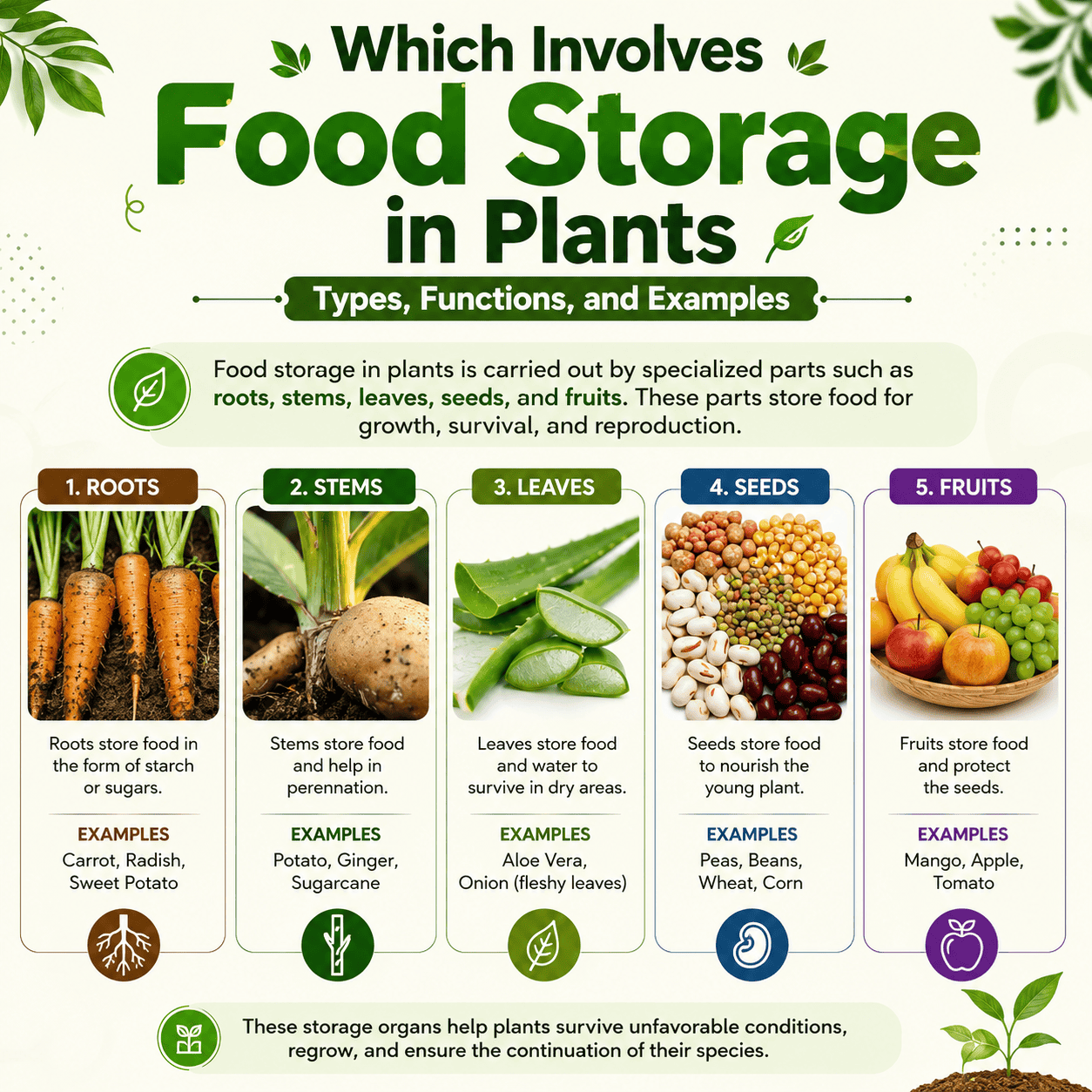
Plants store food in several organs. These are called storage organs. The most common storage parts are roots, stems, leaves, seeds, and fruits.
| Plant part | What it stores | Main purpose | Examples |
|---|---|---|---|
| Roots | Starch and sugars | Storage and support | Carrot, beetroot, radish, sweet potato |
| Stems | Starch and water | Storage and transport | Potato, ginger, onion, sugarcane |
| Leaves | Water and food | Storage and survival | Onion bulb leaves, cabbage leaves |
| Seeds | Starch, proteins, and oils | Food for the new plant | Wheat, rice, maize, pea, bean, sunflower |
| Fruits | Sugars, vitamins, and water | Protection and seed dispersal | Mango, banana, apple, tomato |
How to Dose Fertilizer for Plants | Tips for Indoor and Outdoor Gardening
Dose fertilizer by following the product label, the plant type, and the plant’s growth stage.
Types of Food Storage in Plants
1. Root Storage
Some plants store food in thickened roots. These roots become fleshy and swollen because they hold extra food.
Root storage helps the plant survive during cold weather, dry seasons, or long periods without active growth.
Examples include carrot, beetroot, radish, turnip, and sweet potato.
2. Stem Storage
Many plants store food in stems. In some plants, the stem becomes thick and swollen. In others, the underground stem stores food.
Potato is a stem tuber. Ginger is a rhizome. Onion is a bulb. Sugarcane stores sugar in its stem.
Stem storage is useful because the stem can store food and still help with transport of water and nutrients.
3. Leaf Storage
Some plants store food in their leaves. The leaves may become thick and fleshy. This is common in plants that grow in dry places.
These leaves keep water and food inside them so the plant can survive when water is limited.
Examples include cabbage, lettuce, and the fleshy leaves in some desert plants.
4. Seed Storage
Seeds are one of the most important food storage structures in plants. They store food for the young plant inside the seed.
This stored food helps the seed grow when it starts germination. It provides energy before the new plant can make its own food.
Seeds often store starch, proteins, or oils. Wheat and rice store starch. Beans and peas store protein. Sunflower seeds store oil.
5. Fruit Storage
Fruits also store food, mostly in the form of sugars, water, and vitamins. This makes them sweet, soft, and useful for seed dispersal.
Fruit storage helps attract animals. When animals eat the fruit, they help spread the seeds.
Examples include mango, banana, apple, orange, and tomato.
Functions of Food Storage in Plants
Food storage has several important functions in plant life.
Provides Energy
Stored food gives energy when the plant needs it. This is important during seed germination, sprouting, and new growth.
Supports Growth
Young plants use stored food until they can make enough food on their own through photosynthesis.
Helps Survival
Stored food helps plants survive during winter, drought, or other unfavorable conditions. The plant can stay alive even when growth slows down.
Aids Reproduction
Seeds use stored food to support the embryo during germination. Without this food, the new plant cannot start growing well.
Helps Humans and Animals
Many stored plant foods are important in the human diet. Roots, stems, seeds, fruits, and leaves provide major nutrients to people and animals.
Examples of Food Storage in Plants
Root Examples
Carrot stores food in its taproot. Beetroot stores sugar and other nutrients. Sweet potato stores starch in its root.
Stem Examples
Potato stores food in an underground stem called a tuber. Ginger stores food in a rhizome. Onion stores food in a bulb. Sugarcane stores sugar in its stem.
Seed Examples
Wheat, rice, maize, and barley store starch. Pea and bean store protein. Groundnut and sunflower store oil.
Fruit Examples
Mango, banana, apple, and orange store sugars and water in the fruit tissue.
Why Plants Need Food Storage
Plants cannot always make food at the same rate. Weather, season, light, and water availability can change. Food storage gives plants a backup supply.
It also helps perennial plants come back after dormant periods. In many species, storage organs support new shoots, flowers, and fruits in the next season.
Difference Between Storage Organs and Non Storage Parts
| Feature | Storage organs | Non storage parts |
|---|---|---|
| Main role | Store extra food | Carry out other functions |
| Shape | Often thick or fleshy | Usually thin or normal in size |
| Food content | High | Low |
| Example | Potato, carrot, seed | Flower, thin stem, young leaf |
Important Storage Structures in Plants
Tubers
Tubers are swollen underground stems that store food. Potato is the best example.
Rhizomes
Rhizomes are horizontal underground stems that store food. Ginger is a common example.
Bulbs
Bulbs are short stems surrounded by fleshy leaves. Onion and garlic are examples.
Corms
Corms are short, thick stems that store food below the soil. Taro and gladiolus are examples.
Taproots
Taproots grow deep into the soil and store food in some plants. Carrot and radish are examples.
How Many Purple Flowers Are on Ginger Island? Complete Stardew Valley Guide
22 purple flowers are on Ginger Island. That is the correct answer for the Island Survey at the Island Field Office in Stardew Valley.

Food Storage Materials in Plants
Plants store food in several forms.
| Stored material | Common use in plants | Examples |
|---|---|---|
| Starch | Main energy reserve | Potato, rice, maize |
| Sugars | Quick energy | Sugarcane, beetroot, fruits |
| Oils | Dense energy storage | Sunflower, groundnut |
| Proteins | Growth and repair | Pea, bean, lentil |
Simple Answer for Quick Reference
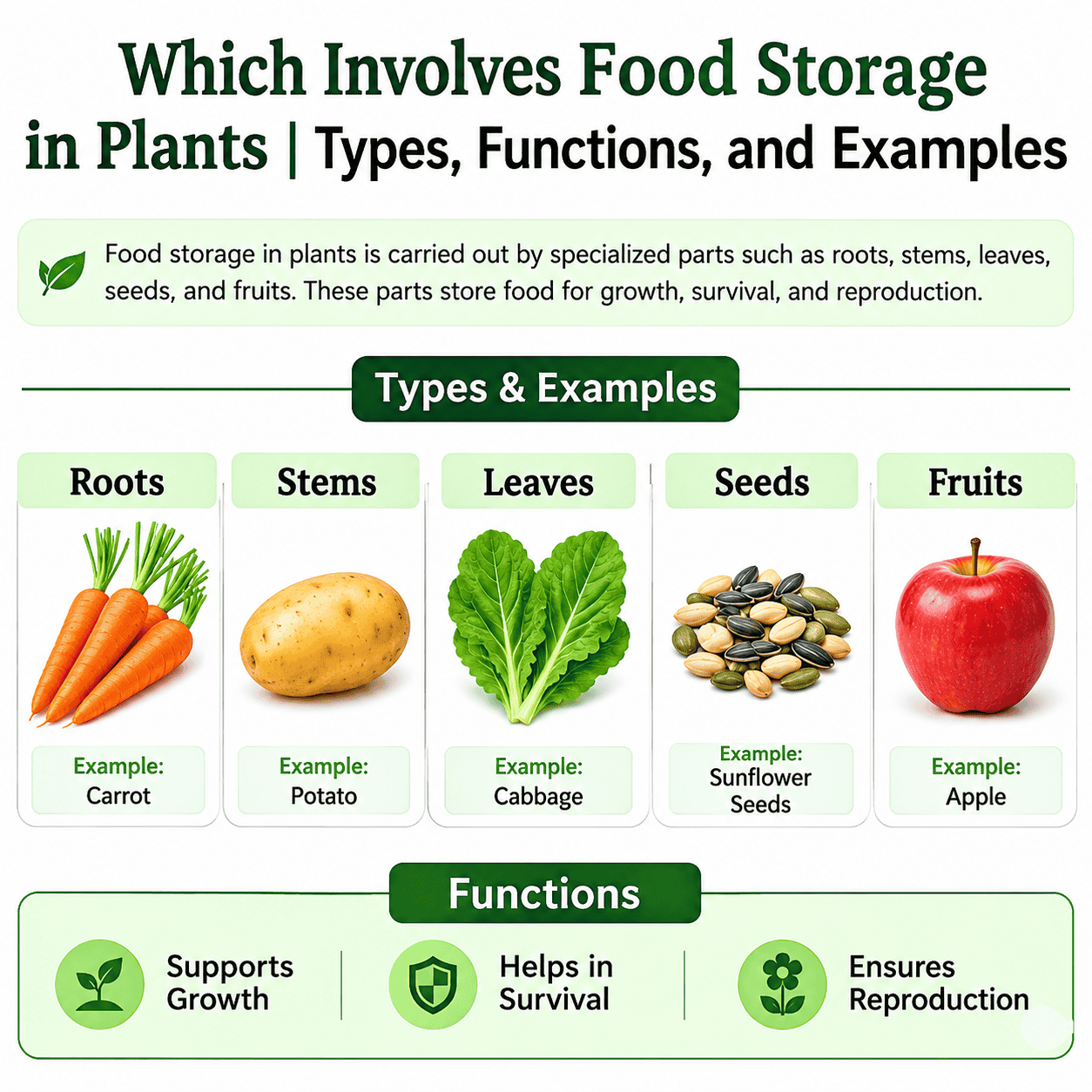
The plant parts that involve food storage are roots, stems, leaves, seeds, and fruits. These parts store starch, sugar, oil, or protein for later use.
Common Questions About Food Storage in Plants
Which part of the plant stores the most food?
Seeds usually store a large amount of food because they need energy for germination and early growth.
Is potato a root or stem?
Potato is a stem. It is an underground stem tuber that stores food.
Why do roots store food?
Roots store food to help the plant survive and grow when conditions are not ideal.
Which plant part stores food for the baby plant?
The seed stores food for the baby plant during germination.
Which plants store sugar in the stem?
Sugarcane stores sugar in its stem.
Which plants store food in leaves?
Some plants store food in fleshy leaves, such as cabbage and lettuce, while many desert plants also keep water and food in their leaves.
