


The Rail Accident Investigation Branch (RAIB) has issued new safety recommendations after a London Overground train left a station with a portable access ramp still attached. The report focuses on improving passenger safety, staff procedures, and railway operations.
What Happened at Norwood Junction Station?
The incident happened on 1 July 2025 at Norwood Junction station in London.
A London Overground train departed while a portable access ramp was still attached to one of its doors. As the train moved, the ramp struck the platform barrier before falling beside the track.
No one was injured. However, a station staff member and a passenger had to move quickly to avoid the ramp. The ramp was destroyed, and the train received minor damage.
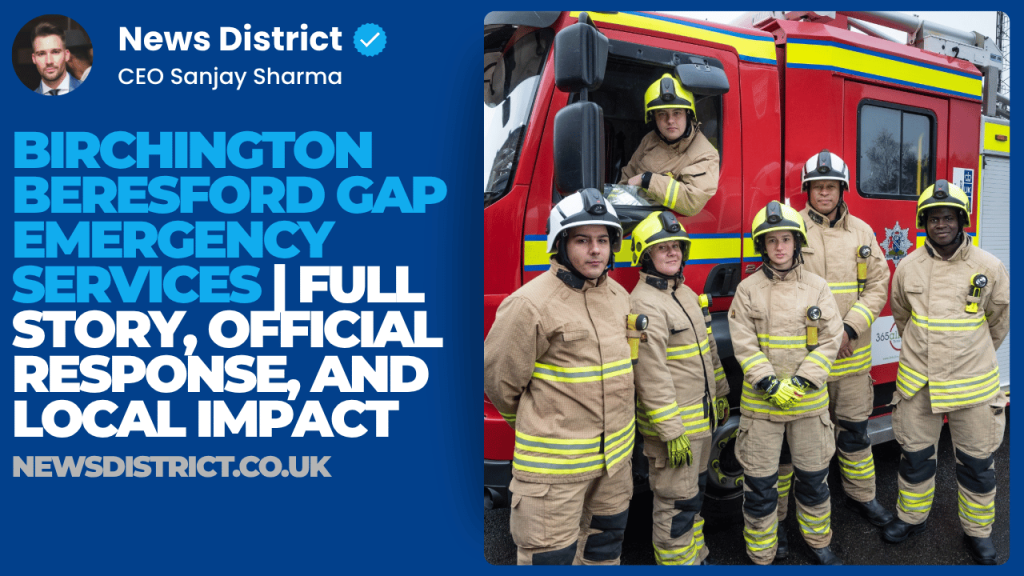
Birchington Beresford Gap Emergency Services | Full Story, Official Response, and Local Impact
A medical emergency at Beresford Gap in Birchington led to a large response from emergency services on 28 March 2025.
Why the Incident Happened
RAIB found several factors that led to the incident.
The investigation showed that:
- The station was using the wrong type of portable access ramp.
- The incorrect ramp allowed the train door to close normally.
- The train was able to move even though the ramp remained attached.
- Staff did not know the ramp was not suitable for that train.
- The correct ramp had not been available at the station since September 2021.
- Routine inspections failed to identify the problem.
Driver and Staff Findings
The investigation also reviewed the actions of railway staff.
RAIB found that:
- The driver believed the train was safe to depart.
- The driver’s final safety checks did not detect the attached ramp.
- The driver was using a mobile phone during the departure process, which likely reduced attention.
- Platform staff tried to stop the train.
- Their warning signals could not be clearly seen because of the limited view on the driver’s in cab monitor.
Main Safety Issues Identified
The report highlighted several wider safety concerns.
| Safety Issue | Explanation |
|---|---|
| Incorrect access ramp | The ramp was not designed for the train involved. |
| Missing equipment | The correct ramp had been unavailable for several years. |
| Inspection failures | Routine checks did not identify the missing equipment. |
| Driver distraction | Mobile phone use reduced driver attention during departure. |
| Limited warning visibility | Platform staff warnings were difficult for the driver to see. |
New Passenger Safety Recommendations
RAIB issued six recommendations to improve railway safety.
These recommendations are aimed at:
| Recommendation Area | Purpose |
|---|---|
| Portable ramp management | Ensure stations use the correct ramps and improve equipment control. |
| National regulations | Review rules covering portable access ramps across the railway network. |
| Industry standards | Update guidance for ramp design and safe operation. |
| Mobile device policies | Strengthen controls on driver mobile phone use during operations. |
| Safety oversight | Improve monitoring of railway operating practices. |
The recommendations have been directed to First Rail London, the Department for Transport, the Rail Safety and Standards Board, and the Office of Rail and Road.
Learning Points from the Report
RAIB included two important learning points.
The first reminds railway staff to seek support if personal issues could affect their concentration while working.
The second reminds train drivers that mobile devices can become a major source of distraction and should not be used during safety critical operations.
Why Portable Access Ramps Matter
Portable access ramps help passengers who use wheelchairs, mobility scooters, or other mobility aids board and leave trains safely.
Correct equipment is important because it:
- Provides safe boarding for passengers with reduced mobility.
- Reduces the gap between the train and platform.
- Supports accessible public transport.
- Helps railway staff assist passengers safely.
Using the wrong ramp can create serious operational and safety risks.
Importance of Routine Equipment Checks
Regular inspections help confirm that stations have the correct equipment available.
Effective inspections should verify:
- The correct ramp type is available.
- Equipment remains in good condition.
- Staff know which ramp matches each train.
- Missing or damaged equipment is reported immediately.
Routine checks reduce the chance of equipment related incidents.

Improving Staff Training
The report shows that staff training is an important part of railway safety.
Training should include:
- Identifying the correct ramp for each train.
- Safe ramp installation and removal.
- Departure safety procedures.
- Communication between station staff and drivers.
- Emergency response procedures.
Better training supports consistent safety standards across stations.
Reducing Driver Distraction
Driver attention is essential during train departures.
Safety procedures can be strengthened by:
- Enforcing strict mobile phone policies.
- Completing visual safety checks before departure.
- Following standard operating procedures without interruption.
- Reporting any concerns before the train moves.
Reducing distractions helps lower operational risk.
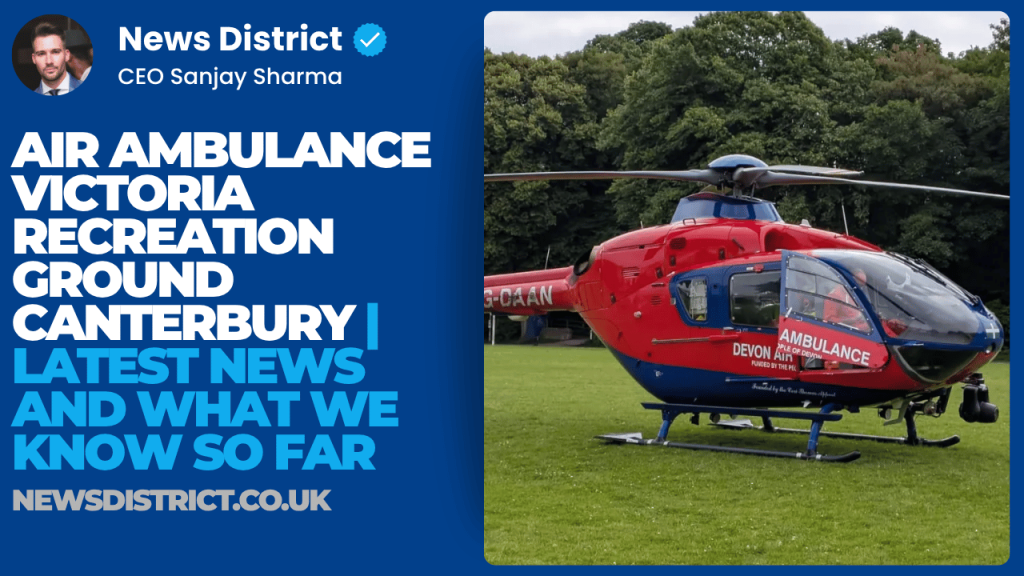
Air Ambulance Victoria Recreation Ground Canterbury | Latest News and What We Know So Far
An air ambulance attended an incident at Victoria Recreation Ground in Canterbury after emergency services responded to a medical emergency.
Benefits of Stronger Passenger Safety Measures
Improved safety procedures provide benefits for passengers and railway operators.
These include:
- Safer boarding for passengers with disabilities.
- Better protection for station staff.
- Improved equipment management.
- Lower risk of operational incidents.
- Greater confidence in public transport safety.
Organizations Involved in the Safety Report
| Organization | Role |
|---|---|
| Rail Accident Investigation Branch | Investigated the incident and published the report. |
| First Rail London | Current London Overground operator receiving recommendations. |
| Department for Transport | Responsible for reviewing transport regulations. |
| Rail Safety and Standards Board | Develops railway safety standards and guidance. |
| Office of Rail and Road | Oversees railway safety regulation. |
