


A federal judge ruled that the Trump administration cannot cancel federal grants simply because they no longer match the administration’s policy priorities after the grants have already been awarded. The decision is an important development in the ongoing legal dispute over federal grant funding.
What Is the Judge Talwani Trump Grant Lawsuit?
The Judge Talwani Trump grant lawsuit is a federal court case involving the Trump administration’s authority to end previously approved federal grants.
The lawsuit was filed by a coalition of Democratic led states. They argued that the federal government could not withdraw grant funding based only on changes in political priorities.
The case focuses on how federal agencies interpret grant termination rules and whether those rules allow the government to cancel funding after grants have already been awarded.
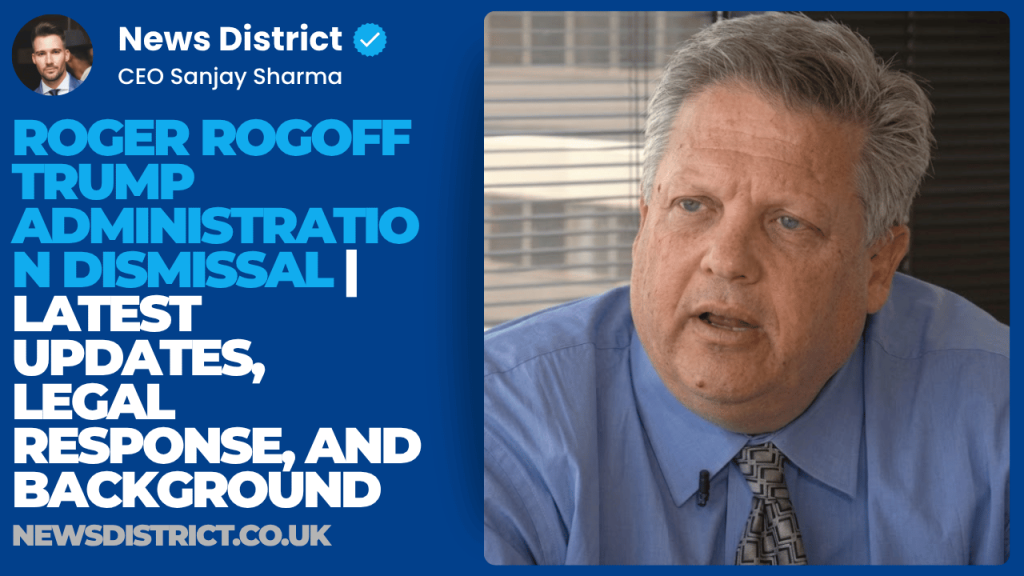
Roger Rogoff Trump Administration Dismissal | Latest Updates, Legal Response, and Background
Roger Rogoff was dismissed by the Trump administration less than an hour after being sworn in as the U.S. Attorney for the Western District…
Who Is Judge Indira Talwani?
Judge Indira Talwani is a United States District Judge for the District of Massachusetts.
She presided over the lawsuit and reviewed whether federal agencies acted within their legal authority when attempting to cancel grants.
Her decision examined federal grant regulations, constitutional principles, and the limits of executive authority.
Why Was the Lawsuit Filed?
Several states challenged the administration after federal agencies relied on an Office of Management and Budget regulation that allows grant termination under certain conditions.
According to the states, the administration used that rule to cancel grants supporting programs that no longer matched current policy goals.
The plaintiffs argued that this interpretation exceeded the government’s legal authority and created uncertainty for grant recipients.

Key Issues in the Case
The lawsuit raised several legal questions.
| Issue | Explanation |
|---|---|
| Grant termination | Whether agencies can cancel awarded grants because priorities change |
| Federal authority | Whether executive agencies exceeded their legal powers |
| Spending Clause | Whether new funding conditions can be added after grants are approved |
| Administrative rules | How federal grant regulations should be interpreted |
These issues affect many federal programs that depend on long term grant funding.
What Did Judge Talwani Rule?
Judge Talwani ruled that federal agencies cannot rely on the disputed regulation to terminate grants simply because agency priorities changed after the grants were awarded.
The court stated that the regulation does not clearly authorize agencies to revoke funding for this reason.
The ruling also found that the administration’s interpretation conflicted with constitutional requirements governing federal spending.
Why the Court Reached This Decision
The court explained that grant recipients receive funding based on conditions that exist when the grant is awarded.
Changing those conditions later because of a new administration’s priorities is not supported by the regulation.
The judge also noted that Congress controls federal spending through laws, and executive agencies cannot create new funding conditions without legal authority.
Programs Affected by the Grant Dispute
The legal dispute involves grants supporting many public programs, including:
- Public safety projects
- Crime prevention initiatives
- Scientific research
- Education programs
- School meal programs
- Climate related projects
- Community development efforts
The case concerns the government’s authority to terminate grants rather than the value of any particular program.
Who Filed the Lawsuit?
The lawsuit was brought by a group of states led by Democratic attorneys general.
The states argued that billions of dollars in grant funding could be affected if the administration continued using the disputed regulation in the way it proposed.
What Was the Trump Administration’s Position?
The administration argued that existing federal regulations allowed agencies to terminate grants that no longer aligned with agency goals or priorities.
Government lawyers also argued that some concerns about future grant cancellations were speculative.
The court ultimately rejected those arguments in its ruling.
Latest Court Update
The court granted summary judgment in favor of the plaintiff states.
This means the judge decided the legal issues without a full trial because the material facts were not in dispute.
The ruling prevents federal agencies from using the challenged interpretation of the regulation to cancel grants based solely on changing policy priorities.
Why This Decision Matters
The ruling provides guidance on how federal grant agreements should be handled after funding has been awarded.
It reinforces the principle that grant conditions should remain consistent unless federal law provides otherwise.
The decision also clarifies limits on executive authority over federal grant programs.

What Happens Next?
Like many federal court decisions, the ruling may be reviewed through the appeals process if the federal government chooses to appeal.
Until a higher court changes the decision or new legal developments occur, the ruling serves as an important interpretation of federal grant regulations and the constitutional limits on changing grant conditions after awards have been made.
Microsoft Lost a Lawsuit to a Gamer Over Account Access After Major Legal Battle
A Brazilian court ruled against Microsoft after a gamer lost access to his Microsoft account and digital Xbox games following an account security issue.

Frequently Asked Questions
What is the Judge Talwani Trump grant lawsuit about?
The lawsuit challenges whether the federal government can cancel already awarded grants because a new administration has different policy priorities.
What did Judge Talwani decide?
Judge Talwani ruled that the administration cannot use the disputed federal regulation to revoke grants solely because agency priorities changed after the grants were awarded.
Who brought the lawsuit?
A coalition of Democratic led states filed the case against the Trump administration.
Does the ruling affect all federal grants?
The decision addresses the use of a specific grant termination regulation. Its direct effect applies to the legal issues raised in this case, although it may influence future grant disputes.
Can the ruling be appealed?
Yes. Federal district court decisions can generally be appealed to a higher federal court.
