

Yes, a pensioner can still be fined or prosecuted if a vehicle is untaxed, wrongly kept on the road, or used without the correct SORN status and insurance. DVLA rules apply to the vehicle and the registered keeper, not to age alone.
Official exemptions depend on the type of vehicle, not on being a pensioner. Based on the GOV.UK exemption list, age is not listed as a tax exemption. Even exempt vehicles still have to be taxed.
What DVLA can do for car tax offences
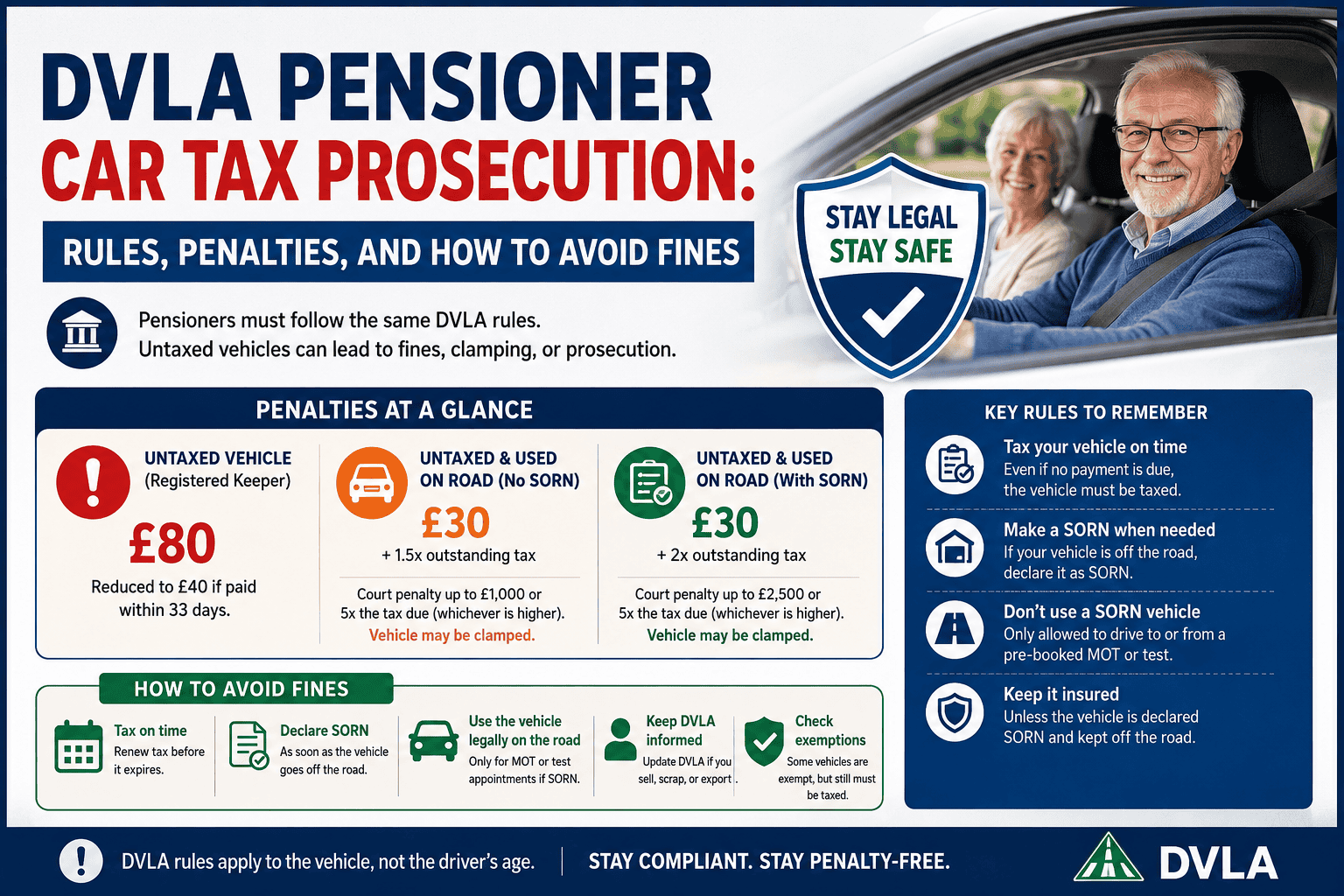
DVLA can issue a late licensing penalty when the registered keeper of an untaxed vehicle is identified in its records. If the vehicle is seen on a public road without tax, DVLA can issue an out of court settlement, and if that is not paid, the case can be taken to magistrates’ court. DVLA can also clamp the vehicle and charge extra fees.
Main penalties at a glance
| Situation | DVLA action | Possible penalty or result |
|---|---|---|
| Registered keeper of an untaxed vehicle | Automatic late licensing penalty | £80, reduced to £40 if paid within 33 days. If unpaid, the case may go to debt collection. |
| Untaxed vehicle used on a public road without SORN | Out of court settlement | £30 plus one and a half times the outstanding tax. If unpaid, the magistrates’ court penalty can be £1,000 or five times the tax due, whichever is greater. The vehicle may also be clamped. |
| Untaxed vehicle used on a public road with SORN in force | Out of court settlement | £30 plus twice the outstanding tax. If unpaid, the court penalty can be £2,500 or five times the tax due, whichever is greater. The vehicle may also be clamped. |
When a SORN is needed
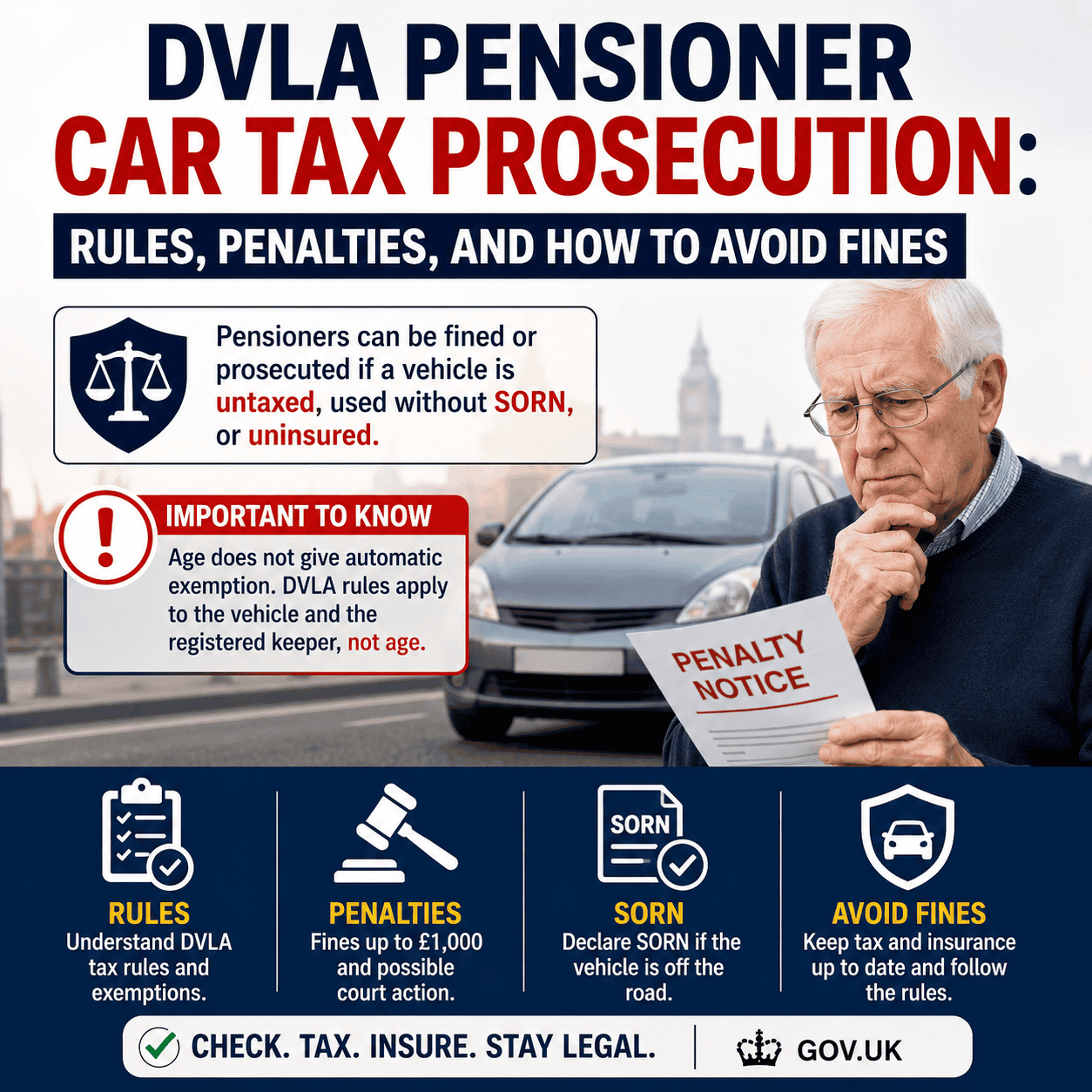
You need to make a SORN when you take a vehicle off the road and want to stop taxing and insuring it. A vehicle is off the road if it is not kept or used on a public road, for example if it is in a garage, on a drive, or on private land. You must also make a SORN if the vehicle is not taxed, not insured, being broken for parts, or bought and kept off the road.
A SORN starts immediately in most cases, cannot be backdated, and does not need to be renewed. It ends when the vehicle is taxed again, sold, permanently exported, or scrapped.
How to avoid fines and prosecution
Tax the vehicle on time every year, even if no tax is due to be paid. GOV.UK says some vehicles are exempt from payment, but they still must be taxed.
Make a SORN as soon as the vehicle is going off the road. If the car is not taxed, not insured, or both, the SORN should be in place before the vehicle is left unused.
Do not keep a SORN vehicle on a public road for normal use. The only allowed road use is driving to or from a pre booked MOT or another testing appointment. Using it for any other reason can lead to court prosecution and a fine of up to £2,500.
Keep insurance in force unless the vehicle is properly declared off the road. Under continuous insurance enforcement, a vehicle kept off the road and declared SORN does not need to be insured. If it is on the road, it must be insured.
Check whether the vehicle is truly exempt before assuming no tax is needed. GOV.UK lists exempt categories such as certain historic vehicles, some disabled passenger vehicles, some mobility vehicles, steam vehicles, and some specialist vehicles. Electric vehicles also follow current tax rules set by GOV.UK.
Tell DVLA when you sell, scrap, or permanently export the vehicle. If DVLA has the wrong keeper record, fines and letters can still be sent to the former keeper, and appeal guidance says you should send proof that you no longer own the vehicle.
What counts as an exemption
Some vehicles do not need to pay vehicle tax, but they still have to be taxed. The official list includes disabled person vehicles, historic vehicles, mobility vehicles and powered wheelchairs, electric vehicles, mowing machines, steam vehicles, and vehicles used for agriculture, horticulture, and forestry.
Historic vehicle exemption currently applies to vehicles made before 1 January 1986. Even then, the vehicle must still be taxed through the normal process.
What to do if DVLA sends a penalty
Read the penalty letter carefully because it tells you how much to pay and by when. GOV.UK says you can pay online, by phone, or by post, and you need the vehicle registration number, the penalty letter, and a debit or credit card for online payment.
Paying the fine does not remove the legal duty to tax the vehicle, declare SORN, insure it, or tell DVLA that you no longer have it. DVLA says you must sort out the vehicle status after payment. If you do not pay on time, the vehicle could be clamped or crushed, or your details could be passed to a debt collection agency.
You may be able to appeal a DVLA fine if it was issued for not taxing or insuring the vehicle, or for not telling DVLA that you no longer have the vehicle.
Fast checks that prevent most DVLA problems
| Check | Why it matters |
|---|---|
| Is the vehicle taxed? | Untaxed vehicles can trigger automatic penalties and, if used on the road, out of court settlements or court action. |
| Is a SORN in place if the car is off the road? | A car off the road should be declared SORN to stop tax and insurance requirements. |
| Is the car insured if it is being used on roads? | Driving on public roads requires motor insurance. |
| Has DVLA been told about a sale, scrap, or export? | Wrong keeper details can lead to fines and enforcement letters being sent to the wrong person. |
Key point for pensioners
There is no general pensioner-only protection from DVLA car tax enforcement. The practical rule is simple. If the vehicle is on the road, it must be taxed and insured. If it is off the road, it should be declared SORN. If it qualifies for exemption, it still has to be taxed through the normal process.
