

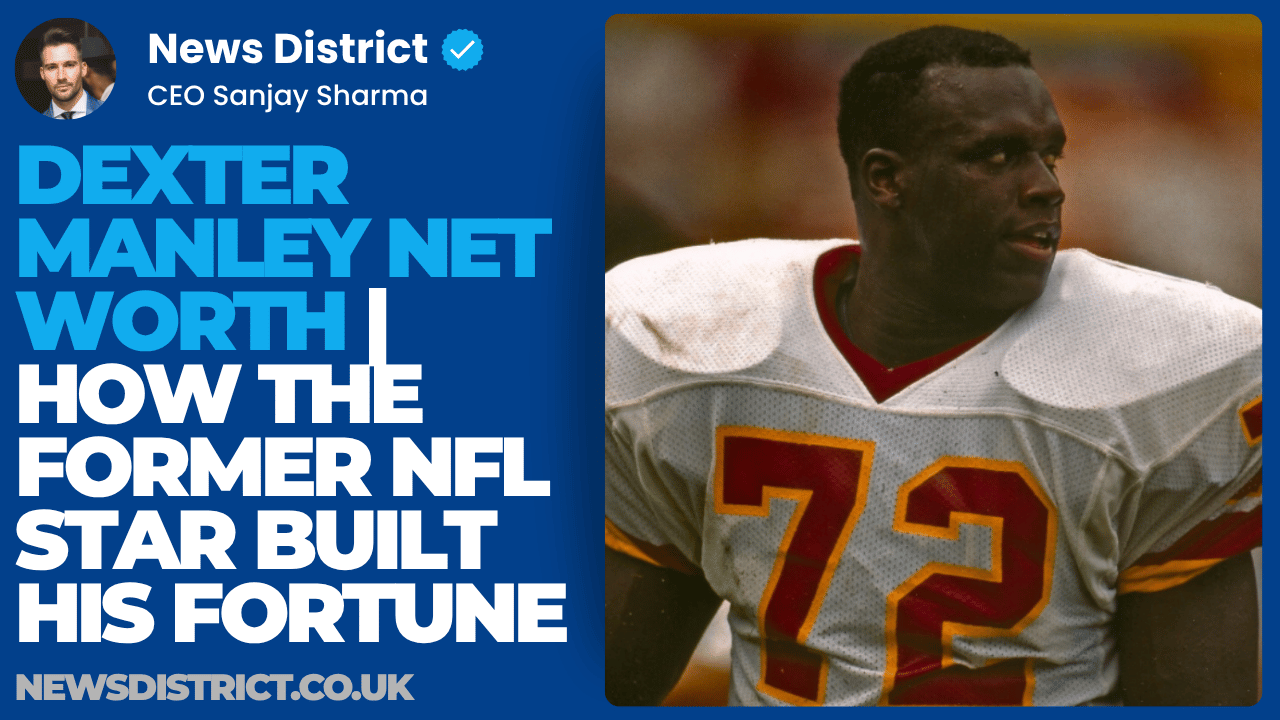
Dexter Manley has an estimated net worth between 1 million dollars and 2 million dollars today. Although he lost his initial NFL earnings to drug addiction and financial crisis during the 1990s, he rebuilt his net worth through an NFL pension, public speaking fees, and memorabilia endorsements.
Financial Overview and Estimated Net Worth
Dexter Manley built his current net worth through long-term NFL benefits and ongoing business activities. During his 11 seasons in professional football, he earned substantial salaries as one of the top defensive players in the league. However, drug addiction and financial mismanagement wiped out his early wealth shortly after his playing career ended in 1994.
Manley recovered financially by utilizing the pension system established by the National Football League. Having played 11 credited seasons, he qualified for full pension benefits under the Bert Bell/Pete Rozelle NFL Player Retirement Plan. This pension provides guaranteed monthly income that covers his baseline living expenses and medical care.
In addition to his pension, Manley earns money through professional speaking engagements. Booking agencies represent him for corporate events, charity galas, and educational seminars. His public speaking fees range from 7,500 dollars to 14,999 dollars per appearance. He also generates income from sports memorabilia shows, autograph signings, and local business partnerships in the Washington D.C. area. He lives comfortably in Montgomery County, Maryland, maintaining financial independence through these combined revenue streams.
Raymond Arroyo Net Worth | Earnings, Book Sales, and Career Hits
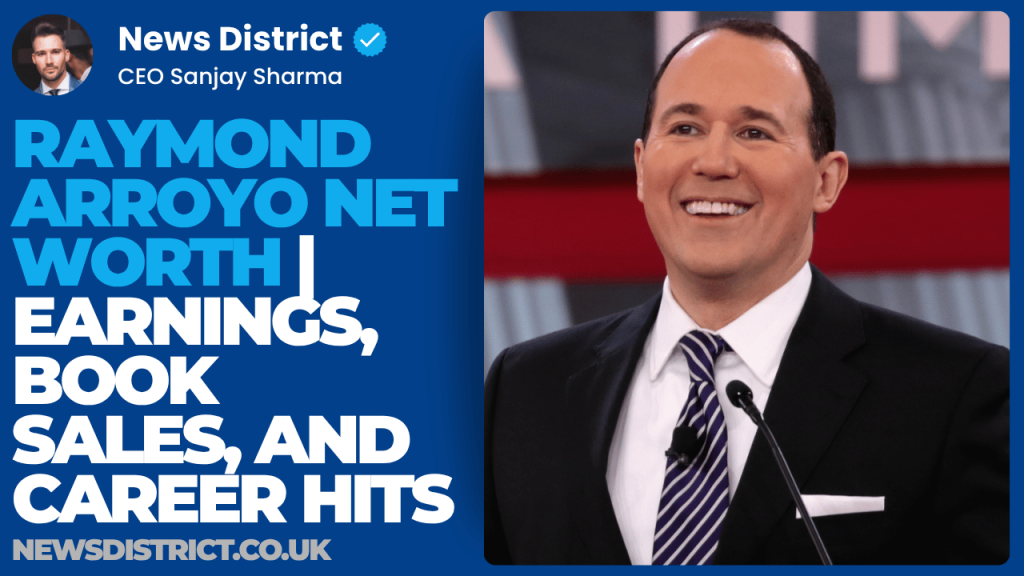
Raymond Arroyo has an estimated net worth of approximately $12 million as of 2026.
Early Life and Academic Misclassification in Houston
Dexter Keith Manley was born on February 2, 1959, in Houston, Texas. He grew up in a working-class household with his parents, Carl and Jewellean Manley, and three siblings named Reggie, Gregory, and Cynthia. His father worked hard to support the family and placed strict rules on academic homework before children could play outside.
During his early childhood, Manley faced severe learning difficulties that went unrecognized by educators. At Douglas Elementary School, he struggled to learn basic reading skills. By the second grade, he had accumulated 19 failing grades. To hide his inability to read, Manley developed coping tricks early in life. When asked to read scripture at Sunday school, he lied and claimed he had forgotten his glasses at home, even though he did not wear glasses.
The school system responded to his academic struggles by placing him in special education classes, labeling him as educable mentally retarded. This placement separated him from non-disabled students and caused significant emotional frustration. Other students often mocked him during recess because his special education class had a different schedule. School principal Larry Marshall later noted that Manley was clearly intelligent and had been misclassified by the school system.
Manley left special education when he entered junior high school. At Yates High School in Houston, his athletic talent became obvious. He dominated on the high school football field, which drew national recruiting attention. Because high school football was highly valued, administrators and coaches focused on his athletic ability, allowing him to graduate without addressing his functional illiteracy.
College Football at Oklahoma State University
In 1977, Manley accepted an athletic scholarship to play college football for the Oklahoma State Cowboys. He played defensive end at Oklahoma State for four seasons, from 1977 through 1980. On the field, he established himself as a powerful pass rusher and a top NFL draft prospect.
Despite spending four years at a major university, Manley remained functionally illiterate. He gained admission to Oklahoma State after scoring an 8 on the ACT exam, an score roughly equivalent to a 400 on the SAT. The college athletic system prioritized his performance on Saturdays over his academic growth, passing him through classes to maintain his athletic eligibility.
To survive in college, Manley relied heavily on visual memorization and help from others. He memorized football playbooks by listening to coaches explain assignments verbally. Off the field, he relied on tutors, classmates, and acquaintances to write papers and complete written coursework for him. He left Oklahoma State in 1981 without earning a college degree and without knowing how to read or write basic English.

NFL Career and High-Earning Contracts in Washington
The Washington Redskins selected Manley in the fifth round of the 1981 NFL Draft as the 119th overall pick. Standing 6 feet 3 inches tall and weighing 253 pounds, Manley possessed extraordinary physical traits. He ran a 4.5-second 40-yard dash and could bench press more than 500 pounds.
Manley quickly became an integral part of Washington’s defense under head coach Joe Gibbs. Fans and media nicknamed him the Secretary of Defense due to his aggressive style of play. Alongside fellow defensive end Charles Mann, Manley anchored a defensive line that helped Washington reach three Super Bowls. He won Super Bowl XVII in the 1982 season and Super Bowl XXII in the 1987 season.
His peak professional performance occurred during the 1986 NFL season. Manley recorded 18.5 sacks that year, setting a Washington franchise single-season record that still stands today. He earned First-Team All-Pro honors and a selection to the Pro Bowl in 1986. He followed that with a Second-Team All-Pro selection in 1987.
His success on the field resulted in lucrative contracts. By the late 1980s, Manley earned upwards of 600,000 dollars per year, making him one of the highest-paid defensive players in professional football at the time. Over his nine seasons in Washington, he recorded 97.5 official sacks. Counting his rookie year before sacks became an official stat in 1982, he accumulated 103.5 total sacks in the NFL.
Washington Redskins All-Time Sack Leaders
The following table displays the top pass rushers in Washington franchise history, reflecting official sacks recorded since 1982:
| Rank | Player Name | Seasons Played | Position | Official Sacks Recorded |
| 1 | Ryan Kerrigan | 2011–2020 | Linebacker / Defensive End | 95.5 |
| 2 | Dexter Manley | 1982–1989 | Defensive End | 91.5 (97.5 total in WAS) |
| 3 | Charles Mann | 1983–1993 | Defensive End | 82.0 |
| 4 | Monte Coleman | 1979–1994 | Linebacker | 43.5 |
| 5 | Andre Carter | 2006–2010 | Defensive End | 34.0 |
Note: Manley recorded 6.0 sacks during his 1981 rookie season prior to the official tracking of sacks in 1982, bringing his true total in Washington to 97.5 sacks.
Complete Career Playing Statistics and History
The following table details Dexter Manley’s season-by-season performance statistics across his 11-year NFL career:
| Season | Team | Games Played | Games Started | Sacks | Forced Fumbles | Fumble Recoveries | Primary Honors & Awards |
| 1981 | Washington | 16 | 9 | 6.0 | 2 | 0 | Rookie Season |
| 1982 | Washington | 9 | 9 | 6.5 | 1 | 3 | Super Bowl XVII Champion |
| 1983 | Washington | 16 | 16 | 11.0 | 2 | 0 | NFC Champion |
| 1984 | Washington | 15 | 14 | 13.5 | 2 | 1 | 13.5 Sack Season |
| 1985 | Washington | 16 | 16 | 15.0 | 2 | 0 | 15.0 Sack Season |
| 1986 | Washington | 16 | 16 | 18.5 | 0 | 1 | Pro Bowl, First-Team All-Pro |
| 1987 | Washington | 11 | 10 | 8.5 | 0 | 0 | Super Bowl XXII Champion |
| 1988 | Washington | 16 | 13 | 9.0 | 0 | 0 | 9.0 Sack Season |
| 1989 | Washington | 10 | 10 | 9.0 | 1 | 0 | Final Washington Season |
| 1990 | Phoenix | 4 | 0 | 0.0 | 0 | 0 | Mid-Season Acquisition |
| 1991 | Tampa Bay | 14 | 7 | 6.5 | 3 | 1 | Final NFL Season |
| Total | 11 Years | 143 | 120 | 103.5 | 13 | 6 | 2x Super Bowl Champion[cite: 6, 17] |
The following table outlines the timeline of Manley’s professional football career across the NFL and CFL:
| Years Active | League | Team | Position | Key Milestones |
| 1981–1989 | NFL | Washington Redskins | Defensive End | 2x Super Bowl Champion, 97.5 Sacks |
| 1990 | NFL | Phoenix Cardinals | Defensive End | Played 4 games |
| 1991 | NFL | Tampa Bay Buccaneers | Defensive End | Recorded 6.5 sacks in 14 games |
| 1992–1993 | CFL | Ottawa Rough Riders | Defensive End | CFL Defensive Starter |
| 1994 | CFL | Shreveport Pirates | Defensive End | Final Professional Season |
Drug Addiction, Suspensions, and Financial Downfall
While achieving success on the field, Manley fought a severe addiction to cocaine. Drug abuse affected many professional athletes during the 1980s, and Manley failed multiple drug tests administered under the NFL substance abuse policy.
In November 1989, after testing positive for cocaine a fourth time, NFL Commissioner Paul Tagliabue banned Manley from the league. Although the league reinstated him in 1990, his NFL career was near its end. He played briefly for the Phoenix Cardinals in 1990 and the Tampa Bay Buccaneers in 1991 before leaving the league.
Manley continued playing football in the Canadian Football League. He spent two seasons with the Ottawa Rough Riders from 1992 to 1993 and played his final season with the Shreveport Pirates in 1994. When he retired from football in 1994, his personal and financial life dissolved quickly.
Without football structure or income, Manley spent his remaining cash savings on drugs. Lacking basic reading and financial management skills, he could not protect his assets. In 1994, he was evicted from his apartment for failing to pay rent. He became homeless in Houston, spending time in crack houses and sleeping on the streets. Between late 1994 and 1995, police arrested him four times for cocaine possession. In November 1995, a judge sentenced Manley to four years in prison. He served two years in Texas state prison before earning release in November 1997. By the time he left prison, his early football fortune was completely gone.

Senate Hearing, Learning to Read, and Literacy Advocacy
Manley began addressing his illiteracy before his legal troubles, inspired by a traumatic event on the football field. On November 18, 1985, he witnessed teammate Joe Theismann suffer a severe, career-ending leg fracture during a game against the New York Giants. Seeing Theismann’s career end instantly made Manley realize that he needed an education to survive after football. He recognized that unlike Theismann, who owned a restaurant business, he had no skills to support himself.
In May 1989, Manley made national headlines by testifying before the U.S. Senate Select Committee on illiteracy. In a televised hearing, he publicly admitted that he could barely read despite attending four years of college and playing eight years in the NFL. His testimony shocked the sports world and brought national attention to academic standards for collegiate athletes.
Following his testimony, Manley enrolled at The Lab School of Washington, a specialized school for individuals with learning disabilities. Working with specialized tutors, he addressed his dyslexia and raised his reading ability from a second-grade level to a tenth-grade level.
The Lab School honored Manley at its 1990 annual gala alongside humanitarian Harry Belafonte and Kinko’s founder Paul Orfalea. In 1992, he co-authored his autobiography, Educating Dexter, with sportswriter Tom Friend. Manley became a national spokesperson for adult literacy programs, traveling across the United States to encourage adults to seek reading help.
How Dexter Manley Rebuilt His Net Worth
After his release from prison in late 1997, Manley set out to rebuild his life and achieve long-term financial stability. He maintained complete sobriety, utilized his reading skills, and created a sustainable business model centered on his sports legacy and personal story.
His modern wealth rests on three main revenue streams:
NFL Pension Plan
The primary foundation of Manley’s net worth is his pension from the Bert Bell/Pete Rozelle NFL Player Retirement Plan. Because he completed 11 credited seasons in the NFL, he qualifies for high-tier retirement benefits. In public interviews, Manley confirmed that his monthly pension income covers all his basic living expenses and bills, giving him continuous financial security.
Public Speaking Fees
Manley turned his life experiences into a professional speaking business. Talent agencies manage his availability for corporate seminars, university lectures, and charity events. His speeches focus on overcoming learning disabilities, surviving addiction, and finding personal resilience. Event organizers pay speaking fees between 7,500 dollars and 14,999 dollars per appearance.
Sports Memorabilia and Local Media Endorsements
Manley remains a popular figure among sports fans in the Washington D.C. area. He regularly participates in sports memorabilia conventions, autograph signings, and fan conventions. Signed photographs, game items, and memorabilia bring in consistent supplemental cash flow. Additionally, local businesses pay him for media appearances and promotional endorsements.
Nicole Parker FBI Age, Bio, and Career as Former Special Agent
Nicole Parker is a former Federal Bureau of Investigation Special Agent who served in the Miami Field Office from 2011 to 2022 after a…

Financial History and Income Stream Breakdown
The following table summarizes the financial stages of Dexter Manley’s life, showing his earning sources, net worth fluctuations, and primary income drivers:
| Life Phase | Time Period | Primary Income Sources | Financial Status & Net Worth Impact |
| Early NFL Career | 1981–1989 | Washington Contracts, Endorsements | Peak athletic earnings; contracts over $600k per year |
| Career Decline | 1990–1994 | Cardinals, Buccaneers, CFL Contracts | Lower playing salaries; rising personal costs |
| Financial Crisis | 1994–1997 | None (Incarceration) | Total loss of wealth; homelessness and bankruptcy |
| Financial Recovery | 1998–Present | NFL Pension, Speaking Fees, Memorabilia | Rebuilt net worth estimated between $1M and $2M |
Manley has managed several health challenges in recent years, including brain surgery to remove a cyst and recovery from a severe COVID-19 infection. He continues to live comfortably in Montgomery County, Maryland, maintaining active involvement with local community initiatives and literacy programs. He remains a celebrated figure in football history, holding a place in the Washington Commanders Ring of Fame as one of the most effective pass rushers in NFL history.
