

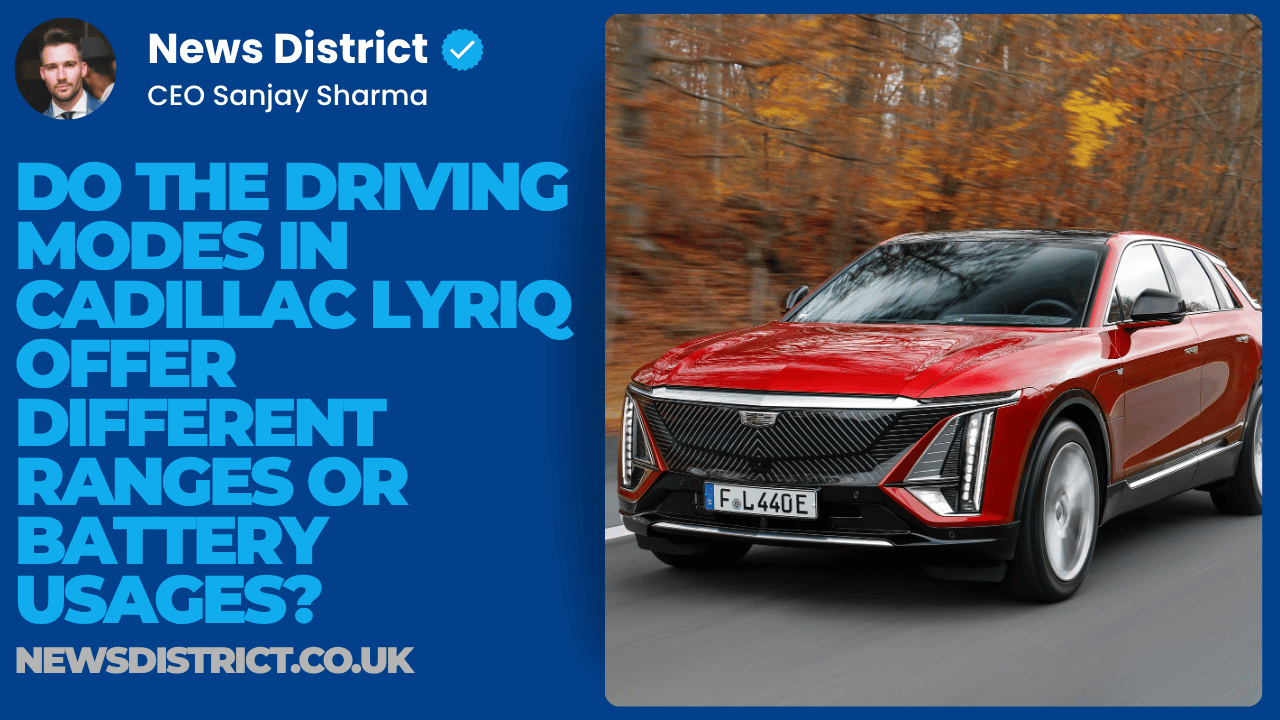
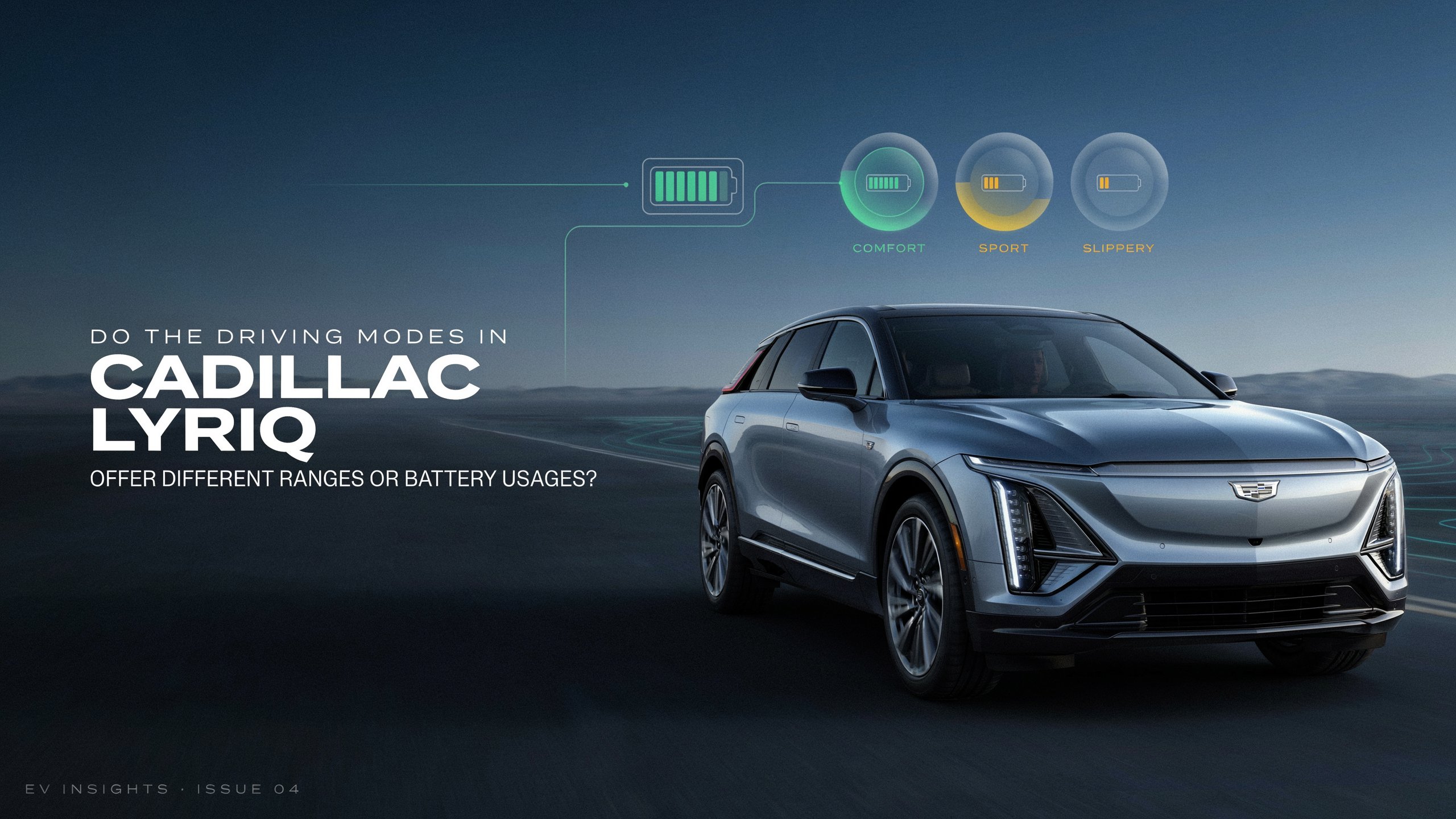
Yes, the driving modes in the Cadillac LYRIQ directly affect driving range and battery usage by altering throttle response, front motor engagement, power output, and suspension settings. Tour mode delivers the highest efficiency and longest range by smoothing power delivery and disengaging the front motor on all-wheel-drive models, whereas Sport mode, Snow/Ice mode, and Velocity Max increase energy consumption.
Overview of Cadillac LYRIQ Powertrain and Battery Architecture
The Cadillac LYRIQ relies on the General Motors Ultium modular electric vehicle platform. The core energy storage unit in the vehicle is a lithium-ion battery pack with a usable capacity of 102.0 kilowatt-hours (kWh). This high-voltage battery pack supplies direct current power to electronic inverters. The inverters convert stored energy into alternating current to drive the electric motors located on the axles.
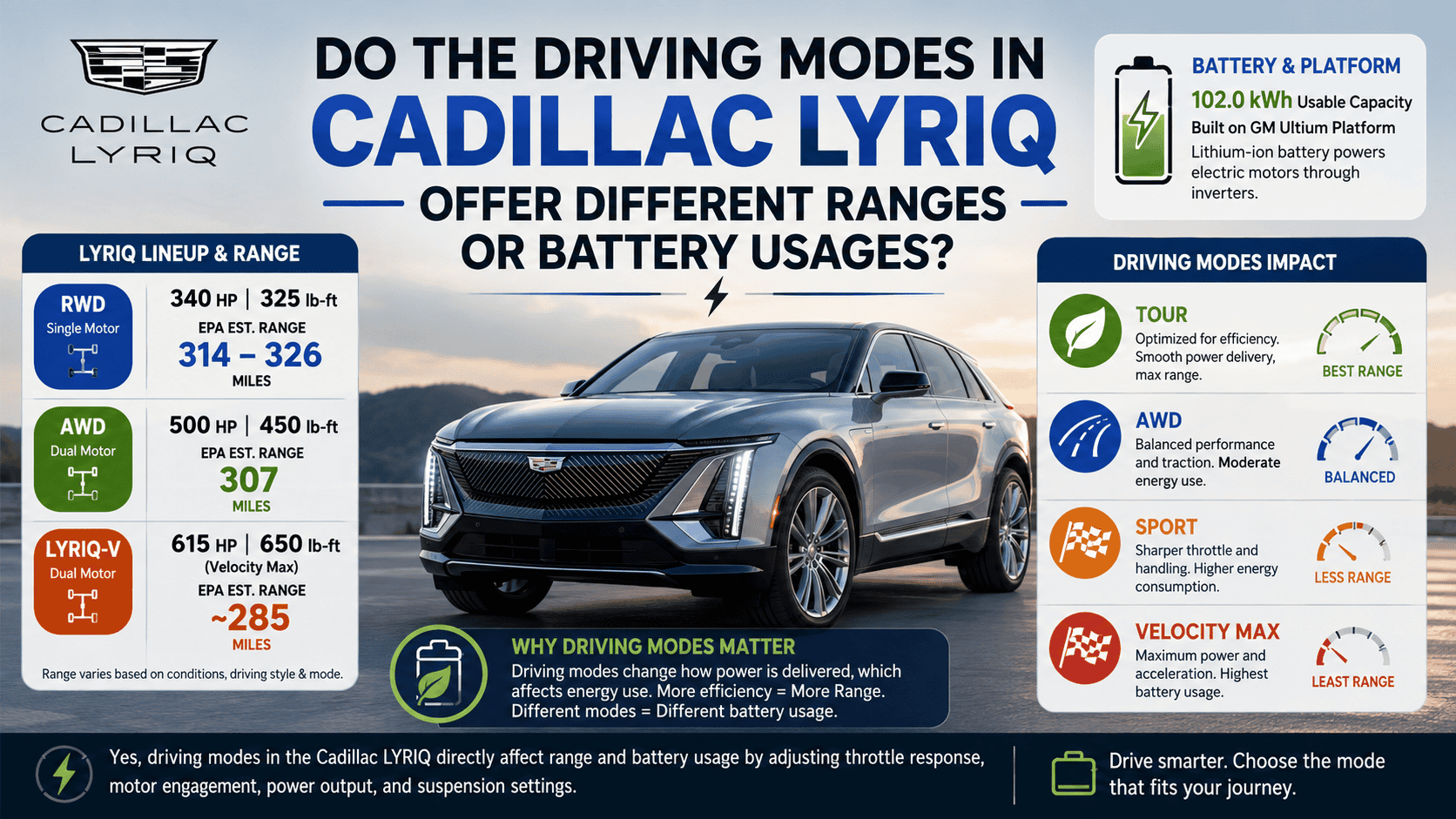
Cadillac offers the LYRIQ in single-motor rear-wheel-drive (RWD) and dual-motor all-wheel-drive (AWD) propulsion layouts. The rear-wheel-drive model uses a single permanent magnet synchronous motor on the rear axle. This single-motor system generates 340 horsepower and 325 pound-feet of torque. It achieves an EPA-estimated driving range of up to 314 to 326 miles on a single full charge.
The dual-motor all-wheel-drive model places an additional induction motor on the front axle. The standard dual-motor system produces 500 horsepower and 450 pound-feet of torque, achieving an EPA-estimated range of 307 miles. The high-performance LYRIQ-V variant increases system output to 615 horsepower and 650 pound-feet of torque when Velocity Max is active. The estimated range for the LYRIQ-V drops to approximately 285 miles due to its high-power motor calibration.
Energy efficiency in electric vehicles is measured in watt-hours per mile (Wh/mi) or miles per kilowatt-hour (mi/kWh). A higher miles per kilowatt-hour rating means the vehicle travels farther on each unit of stored electrical energy. The total distance a vehicle can travel on a charge depends on how fast energy is pulled from the battery. Driver mode selections alter how quickly energy is drawn from the 102.0 kWh pack under different driving conditions.
| Trim and Powertrain Layout | Motor Configuration | Usable Battery Capacity | System Horsepower | System Peak Torque | EPA Estimated Driving Range |
| Single Motor RWD | Single Rear Permanent Magnet Motor | 102.0 kWh | 340 hp | 325 lb-ft | 314 to 326 miles |
| Dual Motor eAWD | Front Electric Motor and Rear Permanent Magnet Motor | 102.0 kWh | 500 hp | 450 lb-ft | 307 miles |
| Performance LYRIQ-V eAWD | High-Output Dual Motors with Velocity Max | 102.0 kWh | 615 hp | 650 lb-ft | 285 miles |
Mechanics of Driver Mode Control and Subsystem Adjustment
The Driver Mode Control system in the Cadillac LYRIQ acts as a central computer interface. Drivers select settings using the Drive Mode App on the 33-inch diagonal display screen or through dedicated controls. Changing the driving mode modifies pre-programmed software maps across several major vehicle subsystems at the same time.
Driver Mode Control modifies six main subsystems:
- Acceleration Feel: Controls throttle pedal gain mapping and sensitivity.
- Torque Distribution: Manages front motor activation and front-to-rear torque balance on all-wheel-drive models.
- Steering Effort: Adjusts power steering resistance levels for lighter or heavier steering wheel feel.
- Suspension Damping: Adjusts electronic continuous damping control valves to soften or stiffen the ride quality.
- Brake Pedal Modulation: Changes brake booster response to make pedal pressure feel softer or more sensitive.
- Motor Sound: Adjusts electric vehicle sound enhancement levels inside the cabin through internal speakers.
Accelerator pedal mapping has a direct effect on battery discharge rates. When a driving mode uses sensitive pedal mapping, small movements of the accelerator pedal cause the battery to discharge high electrical current. Drawing high electrical current increases internal resistance heating inside the battery cells. Heat represents wasted electrical energy that cannot be converted into forward movement.
Drive modes also control how all-wheel-drive models manage the front electric motor. Efficient modes allow the software to disconnect power to the front motor when extra grip is not needed. Turning off the front motor removes mechanical dragging forces and magnetic resistance. Sportier modes keep the front motor powered continuously, which creates a higher baseline energy draw even when cruising at steady speeds.
Mode persistence settings vary depending on which mode is selected. If the driver selects Tour mode, My Mode, or Sport mode, the vehicle retains that setting after the car is turned off and restarted. If the vehicle is in Snow/Ice mode or Velocity Max, it automatically resets to Tour mode upon restarting to protect traction and efficiency.
| Vehicle Drive Mode | Acceleration Pedal Gain | Front Motor State (eAWD Models) | Chassis Suspension Tuning | Electric Steering Assistance | Interior Acoustic Feedback |
| Tour Mode | Smooth linear throttle curve | Automatically disengaged during steady cruise | Balanced comfort calibration | Standard comfort assistance | Quiet baseline operation |
| Sport Mode | Aggressive quick throttle mapping | Continuously energized for immediate grip | Stiffer performance setting | Increased resistance and feedback | Enhanced dynamic audio output |
| Velocity Mode / Velocity Max | Maximum performance power throttle curve | Continuously energized with peak torque balance | Maximum stiffness setting | Firm direct feedback setting | High-performance dynamic audio output |
| Snow/Ice Mode | Dampened soft throttle response curve | Actively engaged for slip management | Balanced traction calibration | Standard stability assistance | Quiet baseline operation |
| My Mode | User configurable option | Dependent on chosen acceleration feel | User configurable setting | User configurable setting | User configurable setting |
Nicole Parker FBI Age, Bio, and Career as Former Special Agent
Nicole Parker is a former Federal Bureau of Investigation Special Agent who served in the Miami Field Office from 2011 to 2022 after a…

Energy Efficiency and Motor Behavior in Tour Mode
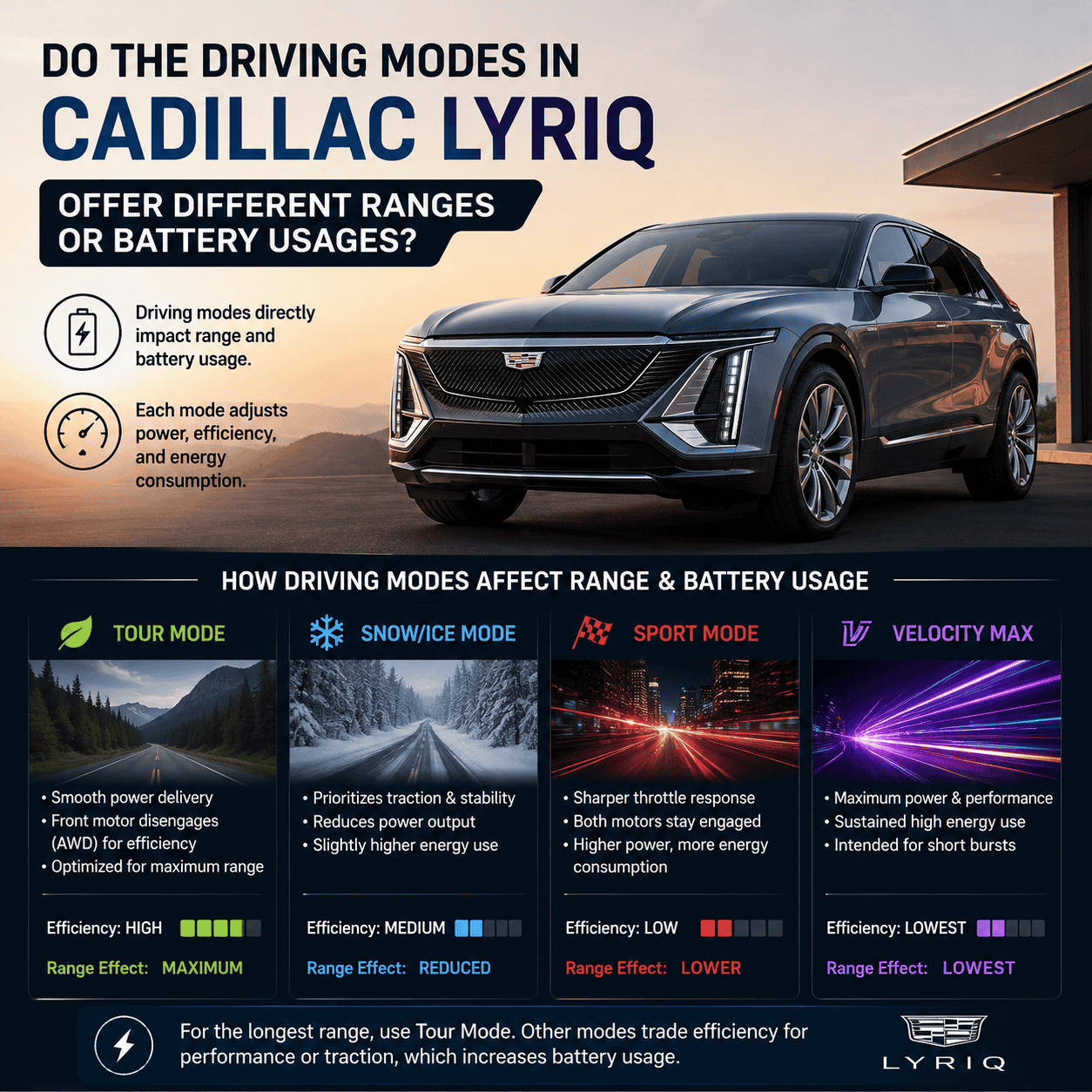
Tour mode is the main driving mode designed for everyday city driving and highway cruising in the Cadillac LYRIQ. It provides a balanced combination of ride comfort, precise handling, and energy efficiency. The control software configures the accelerator pedal with a smooth linear curve. This setup requires firm, deliberate pedal movement to request large amounts of battery power.
In single-motor rear-wheel-drive models, Tour mode prevents sudden spikes in electrical energy consumption during normal driving. Smooth power delivery limits heat buildup in the battery cells. This ensures that more stored chemical energy is converted directly into forward motion, helping the vehicle reach its maximum rated driving range of up to 326 miles.
In all-wheel-drive models, Tour mode is necessary to achieve maximum driving range. The powertrain software uses a front motor disconnect feature during low-load driving conditions. When the vehicle cruises at constant highway speeds on flat ground, the system stops sending electricity to the front motor. Disengaging the front motor eliminates mechanical drag and rotational resistance. The vehicle operates as a rear-wheel-drive car during these moments, reducing energy usage toward single-motor efficiency levels.
Tour mode also sets the climate control and thermal management software to standard baseline levels. It avoids aggressive battery pre-conditioning unless a fast-charging station is selected in the navigation screen. By combining smooth throttle response, reduced auxiliary electrical draw, and mechanical motor disengagement, Tour mode delivers the highest overall energy efficiency of any standard driving mode.
Increased Power Draw in Sport Mode
Sport mode alters vehicle performance by sharpening acceleration response and stiffening suspension feedback. Engaging Sport mode modifies pedal gain curves, steering weight, continuous damping control valves, and interior engine sound generation. While these changes improve vehicle handling and responsiveness, they raise energy consumption rates.
The primary reason for increased battery consumption in Sport mode is aggressive accelerator pedal calibration. Small movements of the pedal cause the power electronics to pull high electrical current instantly from the battery pack. Rapid battery discharge creates heat inside the individual battery cells. The vehicle must then run active liquid cooling pumps and chillers to lower cell temperatures, consuming additional battery electricity.
On all-wheel-drive models, Sport mode turns off the automatic front motor disconnect system. The control software keeps both the front and rear electric motors powered constantly. This ensures instant torque delivery and maximum tire grip. However, keeping the front motor active causes continuous electrical power draw and mechanical drag. The vehicle cannot coast as efficiently as it does in Tour mode.
Sport mode also activates enhanced motor sounds through the interior speakers. While speaker power draw is small compared to motor power draw, the overall mechanical and electrical adjustments in Sport mode combine to increase energy use. Driving continuously in Sport mode can lower total driving range by 10 percent to 20 percent compared to Tour mode under identical driving conditions.
Maximum Performance and Range Limits in Velocity Mode
Velocity mode and Velocity Max are specialized performance settings available on select LYRIQ models, including the high-performance LYRIQ-V. Drivers activate these modes through the Drive Mode App or by pressing the dedicated V button on the steering wheel. A short press of the V button turns on V-Mode, while pressing and holding the button activates Velocity Max.
Velocity Max upgrades standard Sport mode settings by delivering maximum system output. In the LYRIQ-V, Velocity Max unleashes 615 horsepower and 650 pound-feet of torque. This high power level enables rapid acceleration from a standing stop, achieving zero to 60 miles per hour in approximately 3.3 seconds when using launch control.
Delivering maximum horsepower requires extreme electrical current flow from the 102.0 kWh battery pack to the dual electric motors. High current discharge generates high thermal loads across the battery cells, inverters, and motor windings. To protect powertrain hardware, the vehicle activates high-capacity coolant pumps and heat exchangers prior to and during high-power driving.
The combination of intense power discharge, active liquid pre-cooling, and continuous dual-motor power delivery consumes battery energy at a high rate. As a result, vehicles operating in Velocity Max experience a substantial decrease in energy efficiency. The estimated range for performance variants drops to approximately 285 miles under normal conditions. Frequent use of maximum acceleration modes can reduce real-world range by 20 percent to 30 percent compared to baseline Tour mode operation.
Traction Dynamics and Energy Usage in Snow and Ice Mode
Snow/Ice mode is designed specifically for driving on slippery road surfaces covered in snow, ice, slush, or gravel. The primary objective of this mode is maintaining tire traction and preventing wheel slippage. The powertrain control module achieves this by applying a softened accelerator pedal curve.
When the driver presses the accelerator pedal in Snow/Ice mode, the system delivers motor torque slowly and smoothly. This gradual power delivery prevents sudden wheel spin on slick roads. Avoiding sudden acceleration spikes helps prevent wasteful power surges from the high-voltage battery.
However, Snow/Ice mode involves specific trade-offs regarding energy consumption:
- All-Wheel-Drive Traction Control: On all-wheel-drive models, Snow/Ice mode keeps both electric motors powered continuously to monitor and correct wheel slip.
- Electronic Stability Interventions: The control system uses targeted motor torque changes and active wheel braking to maintain vehicle stability, consuming small amounts of energy.
- Battery Chemistry Cold Weather Impact: Snow/Ice mode is typically used in cold temperatures, which increase internal electrical resistance within lithium-ion battery cells and temporarily reduce available capacity.
- Heating System Loads: Winter driving requires running high-voltage cabin heaters, defrosters, and heated seats, which draw electrical power directly from the battery pack.
While the dampened throttle mapping in Snow/Ice mode stops power waste caused by spinning tires, the combination of cold weather, cabin heating, and continuous dual-motor power causes higher net energy usage than warm-weather driving in Tour mode.
Customizing Driving Profiles with My Mode
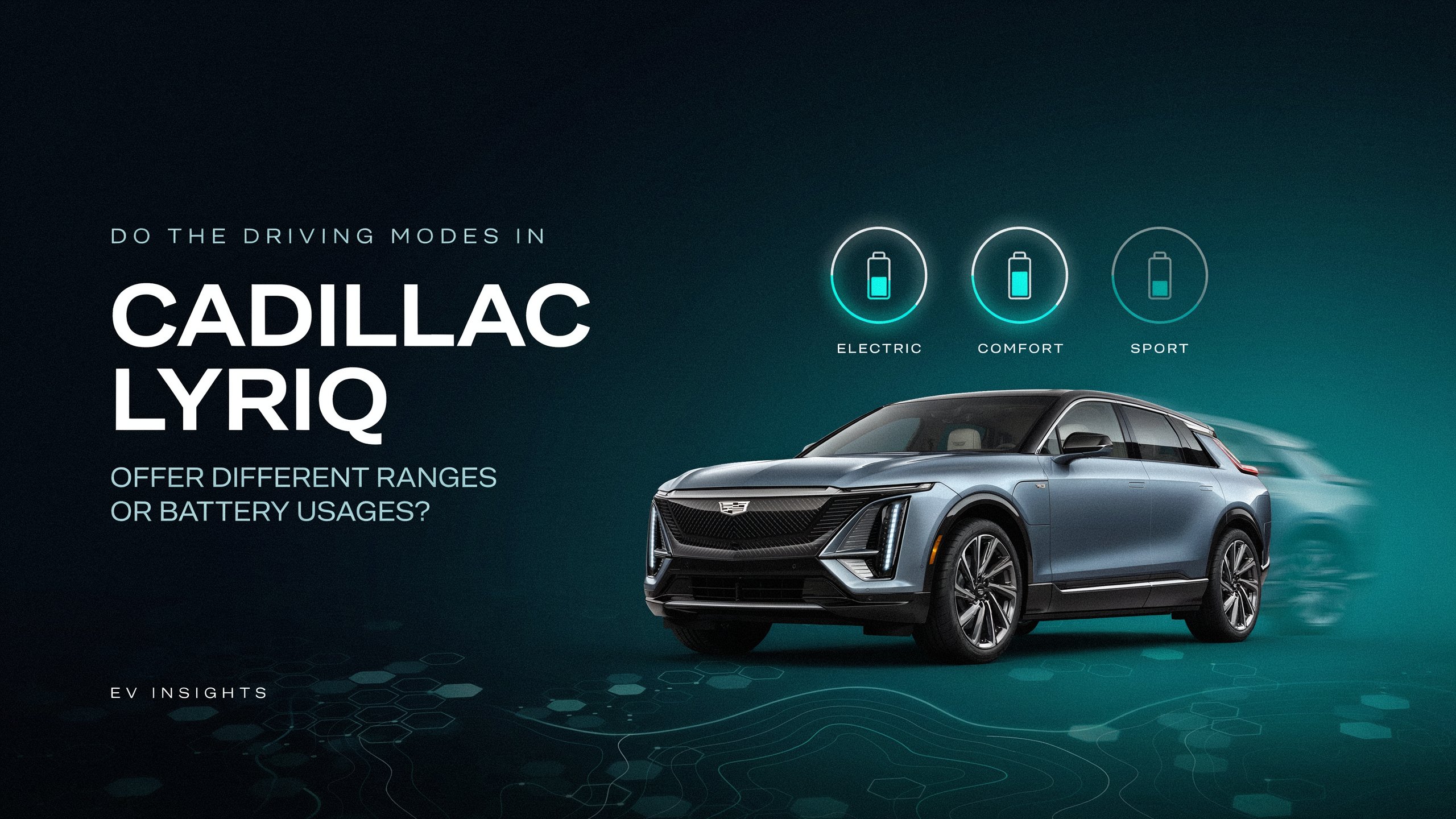
My Mode allows Cadillac LYRIQ drivers to build a customized vehicle driving profile tailored to their individual preferences. Drivers access the Drive Mode Customization menu through the infotainment screen to adjust specific subsystem settings independently.
Drivers can customize five core vehicle settings:
- Acceleration Feel: Configurable to Relaxed, Tour, or Sport.
- Brake Feel: Configurable to Tour or Sport.
- Steering Effort: Configurable to Tour or Sport.
- Suspension Damping: Configurable to Tour or Sport.
- Motor Sound: Configurable to Tour or Sport.
My Mode provides an effective way to optimize energy efficiency while enjoying firm handling responses. For example, a driver can select Relaxed or Tour for Acceleration Feel, while choosing Sport for Steering Effort and Suspension Damping. This configuration provides direct steering feedback and flat cornering without incurring the high battery discharge rates caused by Sport throttle mapping.
Customized settings saved in My Mode persist across vehicle power cycles. When the driver turns off the vehicle and restarts it later, My Mode remains active until another mode is manually chosen. This persistent memory feature allows drivers to establish a permanent daily setup that balances energy efficiency with preferred ride dynamics.
Regenerative Braking Integration Across Drive Modes
Regenerative braking is a primary technology used to extend driving range in the Cadillac LYRIQ. During deceleration, the electric propulsion motors switch their operating role to act as electrical generators. Kinetic energy from the moving vehicle rotates the motor shaft, producing direct current electricity that flows back into the 102.0 kWh battery pack.
The LYRIQ provides two primary methods for controlling regenerative braking strength:
- One-Pedal Driving: Selectable through the infotainment screen with settings for Off, Normal, and High. Setting One-Pedal Driving to Normal or High provides strong motor deceleration when releasing the accelerator pedal, bringing the car to a complete stop without pressing the brake pedal.
- Regen on Demand Paddle: A pressure-sensitive paddle mounted on the left side of the steering wheel. Pulling the paddle allows drivers to manually apply regenerative braking force to slow down and recapture energy.
The chosen drive mode interacts directly with regenerative braking effectiveness. Combining Tour mode with High One-Pedal Driving provides maximum energy recovery during city commuting. The relaxed throttle curve prevents accidental power consumption, while aggressive regenerative braking captures kinetic energy every time the driver lifts off the pedal.
In Sport mode, releasing the accelerator pedal creates rapid deceleration forces designed to simulate traditional engine compression braking. However, because drivers tend to accelerate and decelerate more aggressively in Sport mode, overall energy recovery efficiency declines. Frequent heavy braking can trigger the mechanical friction brakes, which converts kinetic energy into heat energy instead of returning it to the battery.
Comprehensive Drive Mode Comparison Matrix
Different driving modes create measurable variations in energy efficiency, motor control, and total driving range. The table below provides a detailed comparison of motor states, acceleration curves, energy consumption rates, and range impacts across all available modes.
| Drive Mode | Target Driving Condition | Front Motor Status (eAWD Models) | Throttle Sensitivity Level | Average Power Consumption Rate | Estimated Range Impact |
| Tour Mode | General city driving and highway cruising | Disengages during constant speed cruising | Linear and smooth power delivery | Lowest power draw baseline | Maximum rated range (Baseline 100%) |
| Sport Mode | Dynamic driving on winding paved roads | Powered continuously for immediate torque | Highly sensitive quick power delivery | High power draw due to power spikes | Estimated range loss of 10% to 20% |
| Velocity Mode / Velocity Max | Performance driving and track use | Powered continuously with full system output | Maximum power delivery sensitivity | Highest power draw with active cooling loads | Estimated range loss of 20% to 30% |
| Snow/Ice Mode | Driving on snow, ice, or loose gravel surfaces | Powered continuously for wheel slip control | Softened gradual power delivery | Moderate power draw with winter heating loads | Estimated range loss of 5% to 15% |
| My Mode (Efficiency Focus) | Customized profile with Tour acceleration | Disengages during constant speed cruising | Linear smooth power delivery | Low power draw matched to Tour mode | Maximum rated range (Baseline 100%) |
| My Mode (Performance Focus) | Customized profile with Sport acceleration | Powered continuously for immediate torque | Highly sensitive quick power delivery | High power draw matched to Sport mode | Estimated range loss of 10% to 20% |
Editor’s Pick Shopnaclo Explained | Popular Picks, Quality, and Style Insights
Shopnaclo is presented as a finance and business content site, not a product store, based on its homepage and article structure.

External Factors Impacting Range and Energy Use
While selecting a driving mode sets baseline parameters for throttle sensitivity and motor engagement, external environmental conditions and vehicle setups also alter overall efficiency. Understanding these external factors explains why real-world battery usage varies even within the same driving mode.
Ambient Temperature Extremes
Lithium-ion batteries perform with peak chemical efficiency at temperatures between 68 degrees Fahrenheit and 77 degrees Fahrenheit. When ambient temperatures fall below freezing, chemical reactions inside the 102.0 kWh battery slow down. Internal electrical resistance increases, reducing usable battery capacity.
In cold weather, the thermal management system runs electrical heating elements to warm battery coolant. This process uses battery energy regardless of whether the driver selects Tour mode or Sport mode. In extreme heat, active cooling systems run high-capacity pumps and air conditioning compressors to protect battery health, adding continuous electrical load.
Vehicle Speed and Aerodynamic Resistance
Aerodynamic drag increases exponentially as vehicle speed rises. The power required to move a vehicle through the air increases significantly at higher speeds. Cruising at 75 miles per hour requires substantially more energy per mile than driving at 55 miles per hour.
Tour mode disengages the front electric motor during highway cruising to lower mechanical friction. However, at high speeds, aerodynamic resistance becomes the main source of energy loss. Controlling vehicle speed is just as important as selecting an efficient drive mode when trying to achieve maximum driving range.
Wheel Sizes and Tire Tread Resistance
The Cadillac LYRIQ is available with different wheel sizes, ranging from standard 20-inch wheels to optional 22-inch alloy wheels. Larger wheels weigh more and increase rotational mass. Accelerating heavier wheels requires more electrical power from the motors during speed changes.
Tires fitted to 22-inch wheels feature wider tread profiles and softer rubber compounds designed for cornering grip. Soft rubber compounds create higher rolling resistance compared to standard low-rolling-resistance tires. Vehicles equipped with larger performance wheels experience a small baseline efficiency penalty across all driving modes.
Cabin Climate Control Energy Consumption
The high-voltage battery pack supplies power to all cabin comfort systems, including air conditioning, cabin air heating, window defrosters, and seat warmers. Operating cabin air heating elements in winter can draw between 3 kW and 6 kW of power continuously.
Drawing heavy power for cabin heating leaves less energy available to propel the vehicle. Using heated seats and a heated steering wheel warms passengers directly while using less electrical power than heating the entire air volume inside the cabin, helping preserve battery range during winter trips.
Also Read: CnLawBlog Explained | Origins, Content, and Credibility
