

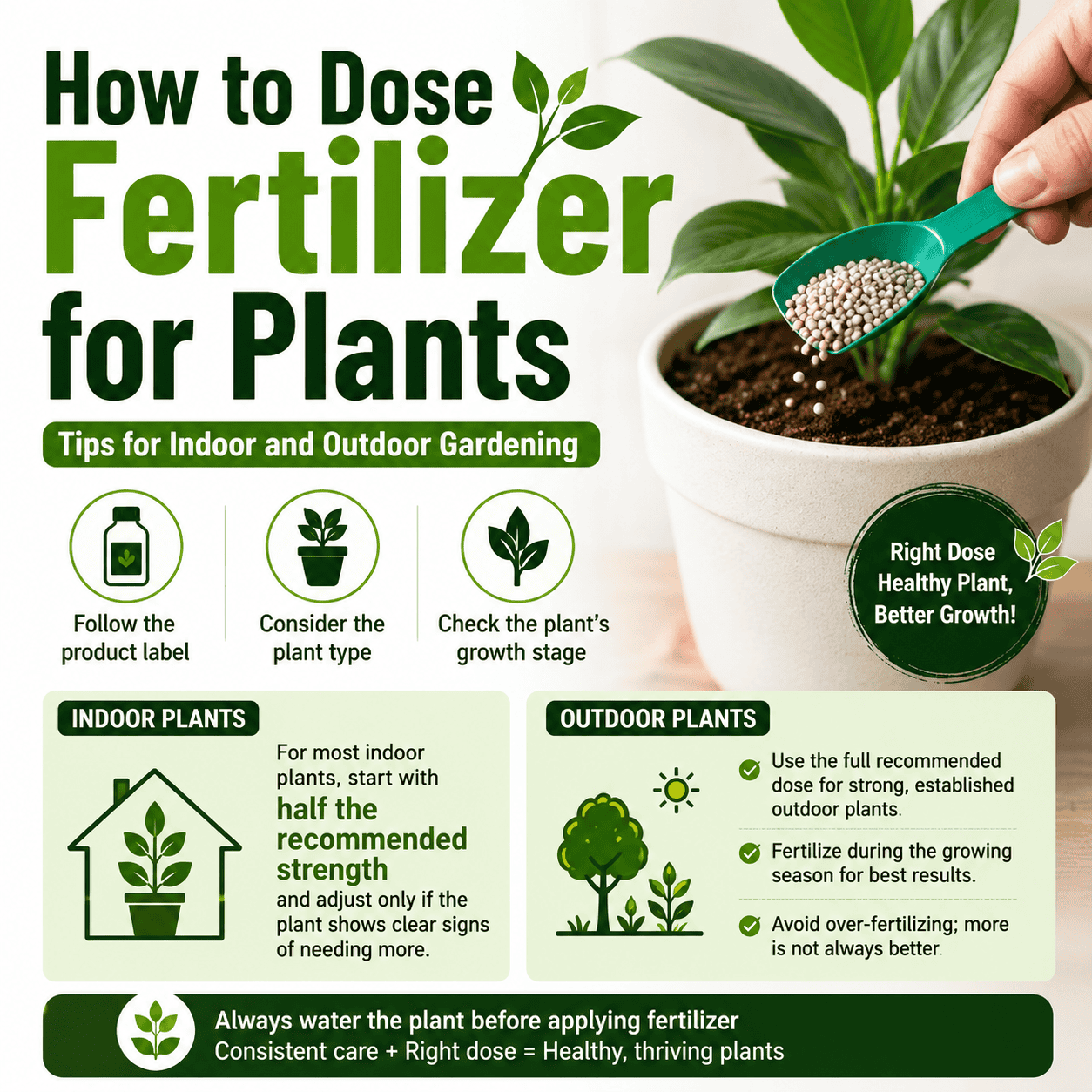
Dose fertilizer by following the product label, the plant type, and the plant’s growth stage.
For most indoor plants, start with half the recommended strength and adjust only if the plant shows clear signs of needing more.
What Fertilizer Dosage Means
Fertilizer dosage is the amount of plant food applied at one time or over a set period. The right dose depends on the fertilizer formula, the plant species, the pot size, soil quality, and how often you water.
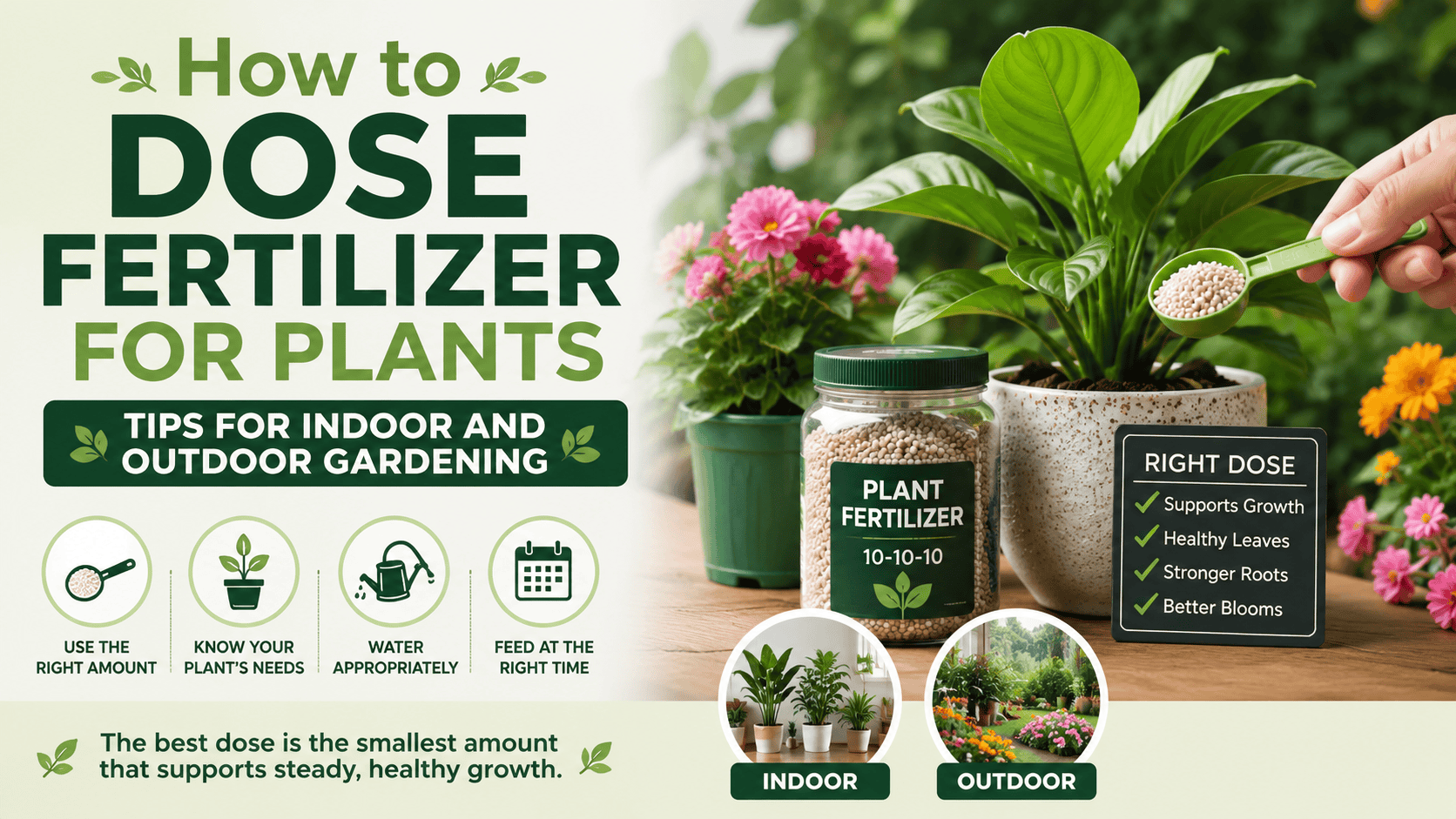
Too little fertilizer can slow growth. Too much can burn roots, damage leaves, and build harmful salts in the soil. The best dose is the smallest amount that supports steady, healthy growth.
Read the Fertilizer Label First
The label is the most important guide. It tells you the nutrient ratio, the mixing rate, and how often to apply it.
Look for these details on the package.
| Label detail | What it means |
|---|---|
| NPK number | The ratio of nitrogen, phosphorus, and potassium |
| Application rate | How much fertilizer to use per gallon, liter, square foot, or pot size |
| Frequency | How often to feed the plant |
| Plant type | Whether the product is for houseplants, vegetables, flowers, lawns, or trees |
| Form | Liquid, granular, slow release, or water soluble |
Never assume all fertilizers work the same way. A strong formula for tomatoes may be too harsh for orchids or seedlings.
Minimalist Home Decor Essentials | 15 Must Have Items for a Clean and Stylish Space
Minimalist home decor focuses on keeping only useful, beautiful, and high quality items.

Know the Main Fertilizer Types
Different fertilizer forms need different dosing methods.
| Fertilizer type | Best use | Dosing tip |
|---|---|---|
| Liquid fertilizer | Indoor plants, container plants, fast feeding | Dilute carefully and apply evenly |
| Water soluble fertilizer | Vegetable gardens, flowers, regular feeding | Mix exactly as directed |
| Granular fertilizer | Lawns, beds, shrubs, trees | Spread evenly and water in |
| Slow release fertilizer | Long feeding cycles for pots and beds | Use less often, but do not overapply |
| Organic fertilizer | Soil building and gentle feeding | Follow package rates because strength varies |
Liquid fertilizers act fast. Granular and slow release products act more slowly. That means liquid fertilizer is easier to overuse, while granular fertilizer is easier to apply too heavily in one spot.
How to Dose Fertilizer for Indoor Plants
Indoor plants usually need less fertilizer than outdoor plants. They grow in limited soil and often receive less light, so they use nutrients more slowly.
Use these rules for indoor plants.
| Indoor plant situation | Suggested dosing approach |
|---|---|
| New plant in fresh potting mix | Wait before feeding if the soil already contains fertilizer |
| Active growth in spring and summer | Use half strength for most liquid fertilizers |
| Low light rooms | Feed less often because growth is slower |
| Succulents and cacti | Use very light feeding or a diluted formula |
| Blooming indoor plants | Use a fertilizer made for flowering plants, but still avoid overfeeding |
A safe starting point is half the dose printed on the label. For example, if the label says 1 teaspoon per liter of water, start with 1/2 teaspoon per liter.
For small pots, measure carefully. Even a small extra amount can cause root stress in indoor plants.
How to Dose Fertilizer for Outdoor Plants
Outdoor plants usually have access to more soil and more nutrients, but they also grow faster and may need regular feeding.
The right dose depends on the plant category.
| Outdoor plant type | Dosing guidance |
|---|---|
| Vegetables | Feed more during active growth and fruiting |
| Annual flowers | Use regular feeding for strong blooms |
| Perennials | Feed lightly unless soil is poor |
| Shrubs | Use moderate feeding at the root zone |
| Trees | Apply fertilizer across the drip line, not against the trunk |
| Lawn grass | Use lawn fertilizer at the labeled rate and water after application |
For garden beds, do not place fertilizer directly against stems or trunks. Spread it around the root zone where the plant can absorb it safely.
How to Calculate the Right Amount
The correct amount depends on the area you are feeding.
Use this simple method.
- Check the label for the amount per pot, gallon, square foot, or plant.
- Measure the exact area or container size.
- Use a measuring spoon, cup, or scale instead of guessing.
- Mix or spread the fertilizer evenly.
- Water after applying if the product requires it.
When a label gives a range, use the lower end first. Increase only if the plant remains healthy and the growth response is too weak.
Signs of Too Much Fertilizer
Overfertilizing is common. It can happen in both indoor and outdoor gardening.
Watch for these signs.
| Sign | What it may mean |
|---|---|
| Leaf tip burn | Fertilizer salt stress |
| Yellow or brown leaf edges | Too much feeding or poor watering habits |
| White crust on soil | Salt buildup |
| Wilting even when soil is moist | Root damage |
| Very fast, weak growth | Too much nitrogen |
| Reduced flowering | Nutrient imbalance |
If you see these signs, stop feeding for a while and flush the soil with clean water if the plant type allows it.
Signs of Too Little Fertilizer
Plants also show clear signs when they are underfed.
| Sign | What it may mean |
|---|---|
| Slow growth | Not enough nutrients |
| Pale leaves | Low nitrogen or poor nutrient uptake |
| Few flowers | Not enough phosphorus or general feeding |
| Weak stems | Poor nutrition |
| Older leaves yellow first | Possible nutrient shortage |
Do not treat every yellow leaf as a fertilizer problem. Watering problems, poor drainage, low light, pests, and root damage can cause the same symptom.
Best Feeding Schedule for Indoor and Outdoor Plants
Feeding frequency should match growth speed, not habit.
| Plant type | Common feeding schedule |
|---|---|
| Indoor foliage plants | Every 2 to 4 weeks during active growth |
| Indoor flowering plants | Every 1 to 2 weeks with a diluted formula |
| Houseplants in winter | Much less often or not at all |
| Vegetables | Regular feeding during the growing season |
| Annual flowers | Consistent feeding for long bloom periods |
| Trees and shrubs | Seasonal feeding, not constant feeding |
Plants usually need less fertilizer in cool weather and more during active growth. Most plants slow down in autumn and winter, so reduce feeding during that time.
How Soil and Water Change Fertilizer Needs
Soil type affects how fertilizer behaves.
Sandy soil drains quickly and can lose nutrients faster. Clay soil holds nutrients longer but can also hold too much water. Potting mix in containers dries out faster and often needs more regular feeding than garden soil.
Water quality also matters. Hard water can leave mineral buildup in pots. If salt buildup is already present, reduce fertilizer dose and flush the soil more often.
Fertilizer Dosing for Common Plant Groups
Different plants need different nutrient levels.
| Plant group | Dosing note |
|---|---|
| Leafy houseplants | Use balanced fertilizer in light doses |
| Flowering plants | Use a formula that supports blooms |
| Herbs | Feed lightly to avoid weak flavor |
| Tomatoes and peppers | Feed regularly during fruit production |
| Seedlings | Use very weak fertilizer or wait until established |
| Orchids | Use specialized, diluted feeding |
| Succulents | Feed sparingly |
Fast growing plants usually need more frequent feeding. Slow growing plants need less.
How Many Purple Flowers Are on Ginger Island? Complete Stardew Valley Guide
22 purple flowers are on Ginger Island. That is the correct answer for the Island Survey at the Island Field Office in Stardew Valley.
Safe Mixing and Application Steps
Correct mixing protects roots and gives even results.
- Measure the fertilizer exactly.
- Mix it in the correct amount of water.
- Stir well so the nutrients spread evenly.
- Apply to moist soil unless the label says otherwise.
- Avoid getting strong fertilizer on leaves unless the product is made for foliar feeding.
- Wash tools after use.
- Store fertilizer in a dry place with the lid closed.
Never mix more than you need. Stronger solutions do not produce faster healthy growth. They usually cause stress instead.
Common Mistakes to Avoid
These mistakes cause many fertilizer problems.
| Mistake | Why it causes trouble |
|---|---|
| Guessing the dose | Easy to overfeed |
| Feeding dry roots | Can burn roots |
| Fertilizing sick plants too much | Stress increases |
| Using lawn fertilizer on houseplants | Wrong strength and ratio |
| Feeding in winter without need | Waste and salt buildup |
| Ignoring the label | Product rates vary a lot |
A measured approach is always safer than a heavy one.
Simple Rules for Better Fertilizer Dosing
Keep these rules in mind for reliable results.
| Rule | Why it matters |
|---|---|
| Start low | Reduces burn risk |
| Match the plant | Different plants need different nutrients |
| Follow the label | Product formulas vary |
| Water when required | Helps nutrients move into the root zone |
| Adjust by season | Plants feed differently across the year |
| Watch the plant | Growth and leaf color show whether the dose is working |
These basic rules work for both indoor and outdoor gardening. They help prevent damage and improve long term plant health.
