

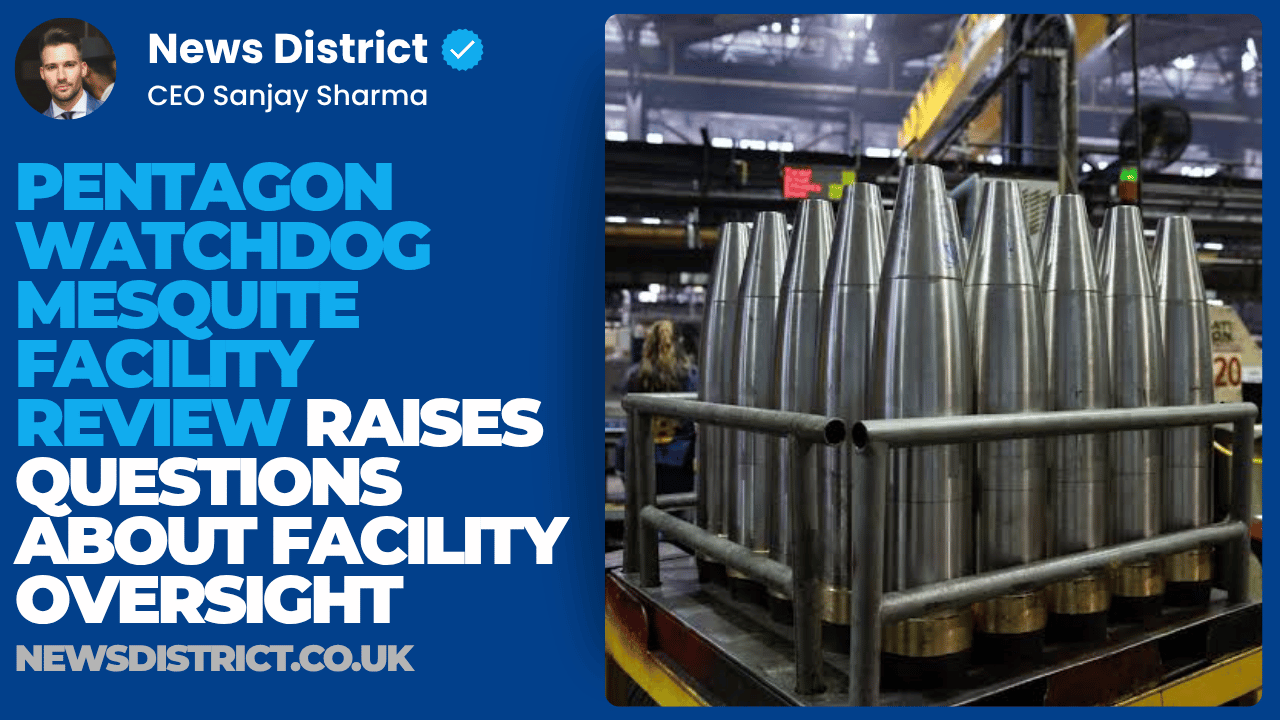
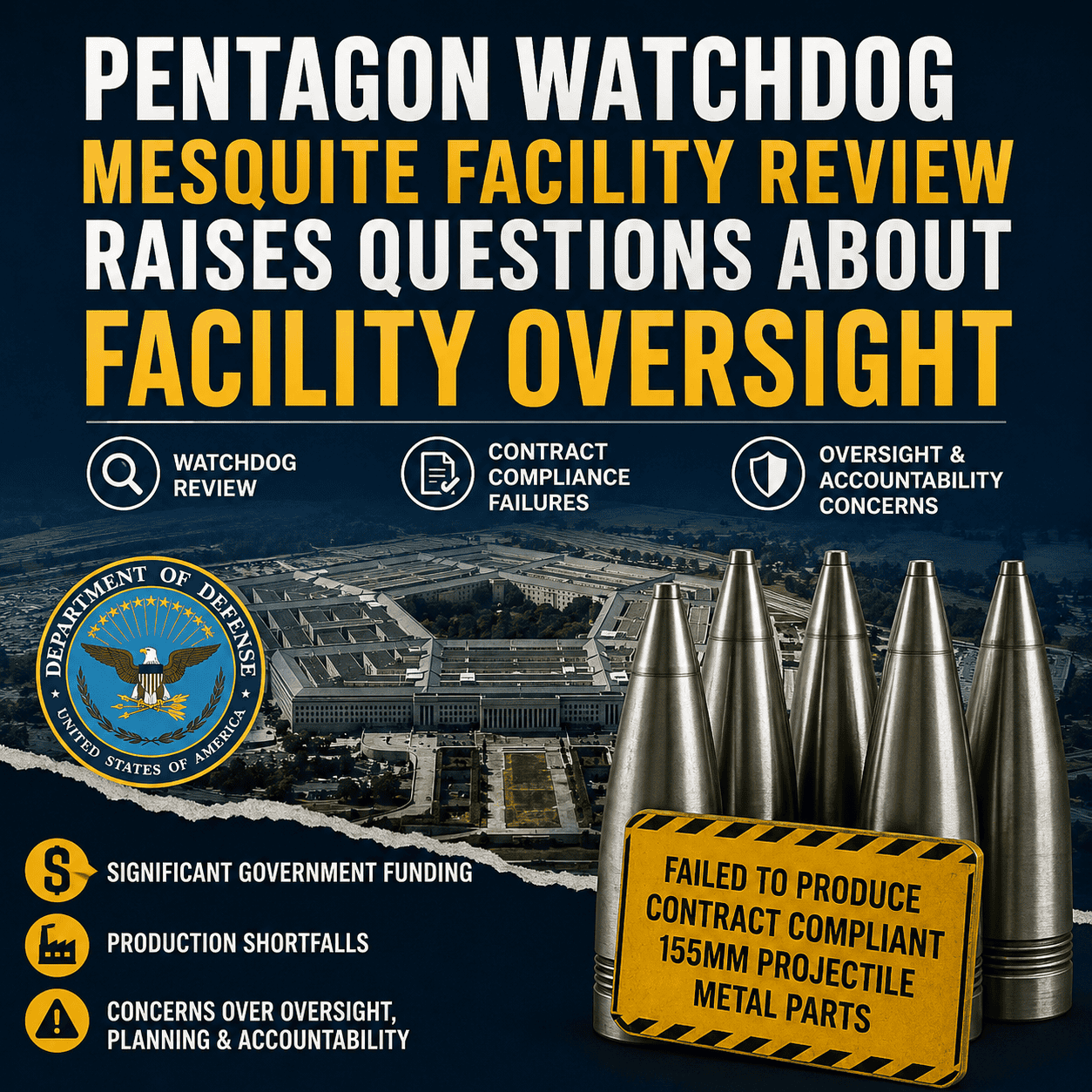
A Pentagon watchdog review found that the Mesquite ammunition facility failed to produce contract compliant 155mm projectile metal parts despite receiving significant government funding. The findings have raised concerns about project oversight, contract management, and defense production planning.
What Is the Pentagon Watchdog Mesquite Facility Review?
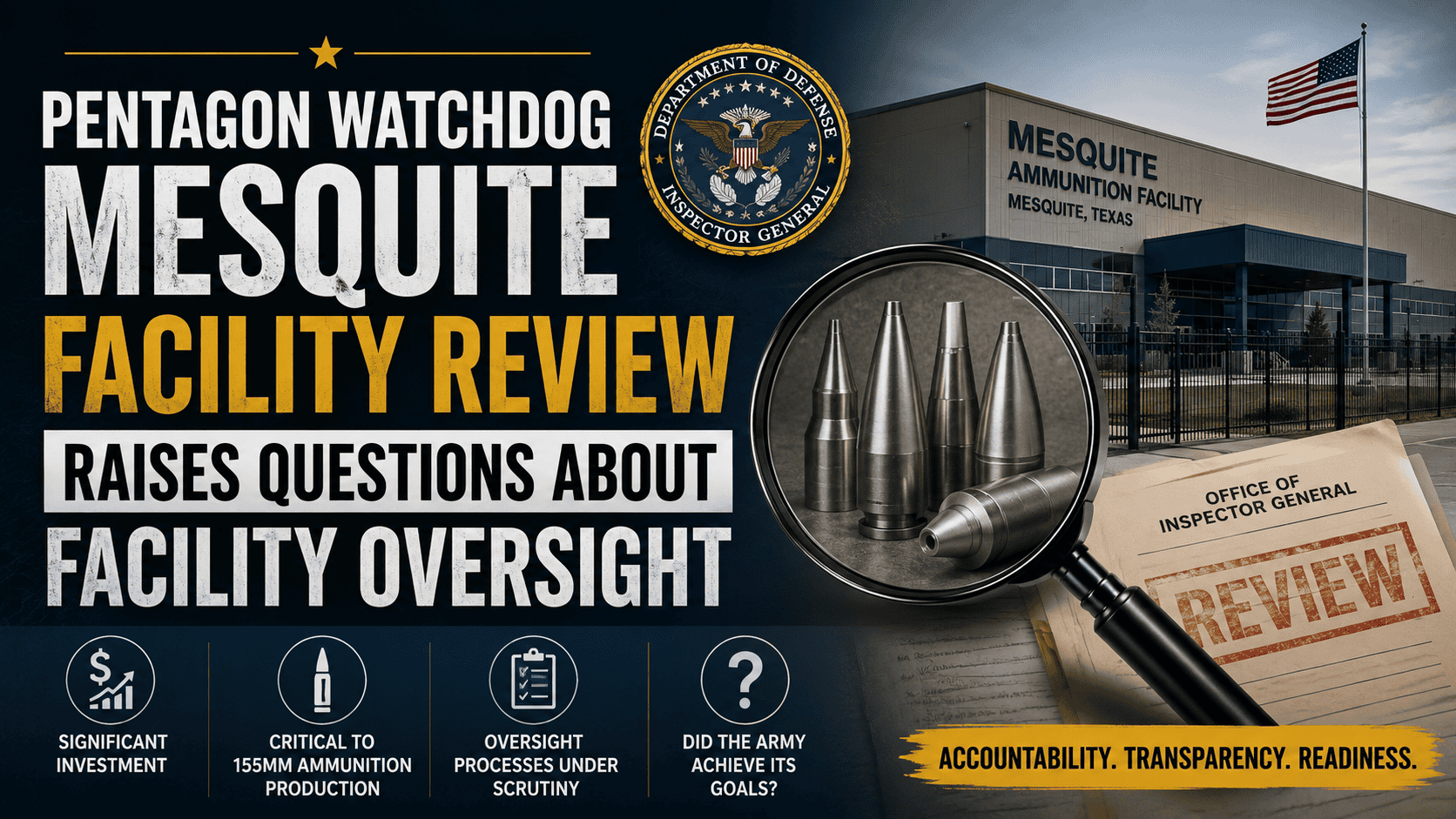
The Pentagon watchdog review refers to an investigation by the U.S. Department of Defense Office of Inspector General into the performance of the Mesquite, Texas, ammunition production facility.
The facility was established to increase the production of metal projectile parts used in 155mm artillery rounds. These parts are essential for assembling artillery ammunition used by the U.S. military and its allies.
The review examined whether the Army’s investment in the facility achieved its intended goals and whether oversight processes were effective.
Why the Mesquite Facility Was Built
The Army expanded ammunition production after large numbers of 155mm artillery rounds were supplied to Ukraine and other military requirements increased.
The Mesquite facility was expected to play an important role by producing approximately 30,000 projectile metal parts each month.
Its production would support the Army’s broader objective of increasing monthly 155mm artillery production.
Key Findings From the Watchdog Review
According to the Inspector General’s report:
| Finding | Details |
|---|---|
| Production status | No contract compliant projectile metal parts had been produced by March 2026 |
| Government investment | Approximately $469 million was spent to establish the facility |
| Planned output | About 30,000 projectile parts per month |
| Oversight concern | Questions were raised about contract management and investment decisions |
| Operational impact | Delays affected the Army’s ammunition production goals |
These findings prompted recommendations for additional review of project management and contractor performance.
What Oversight Issues Were Identified?
The review highlighted several areas where oversight became a concern.
Contract Performance
The facility did not deliver production results that matched contract expectations during the review period.
Project Management
The report questioned whether project risks were properly evaluated before approving manufacturing plans.
Government Investment
The Inspector General stated that the large financial investment did not produce the expected operational results during the examined period.
Why 155mm Artillery Production Matters
The 155mm artillery round is one of the most widely used ammunition types by the U.S. Army and many allied nations.
It supports:
- Long range artillery systems
- Military training
- Operational readiness
- International security assistance
- Reserve stock replenishment
Because demand increased in recent years, expanding production became a national defense priority.
How the Facility Affected Production Goals
The Army planned to significantly increase monthly artillery production.
The Mesquite facility was expected to contribute a major portion of that increase.
Without the expected output from Mesquite, overall production remained below the planned target during the review period. Other production facilities also experienced varying levels of performance.
Inspector General Recommendations
The watchdog recommended additional actions to strengthen oversight.
These included:
| Recommendation Area | Purpose |
|---|---|
| Contract review | Evaluate whether government funds were effectively used |
| Corrective planning | Develop solutions to improve production |
| Risk management | Review decisions that affected project execution |
| Performance monitoring | Improve oversight of contractor progress |
The Army generally agreed with the recommendations and indicated that corrective actions would continue.
Response From the Contractor
General Dynamics Ordnance and Tactical Systems operates the Mesquite facility.
Following the Inspector General’s findings, the company stated that it had reached an agreement with the Army on a path forward and planned additional investments to improve the facility’s performance.
How Pentagon Oversight Works
The Department of Defense Office of Inspector General conducts independent audits, inspections, and investigations.
Its responsibilities include:
- Reviewing government spending
- Monitoring contract performance
- Identifying management weaknesses
- Detecting waste and inefficiency
- Recommending corrective actions
The Inspector General operates independently from the military departments it reviews.
Why Facility Oversight Is Important
Strong oversight helps ensure that defense projects achieve their intended goals.
Effective oversight supports:
- Responsible use of taxpayer funds
- Reliable military production
- Better contract accountability
- Early identification of project risks
- Improved operational readiness
Regular audits also provide government leaders with information needed to improve future defense programs.
Lessons for Future Defense Projects
Large manufacturing projects often involve new equipment, technical challenges, and complex supply chains.
Government agencies can improve future projects by focusing on:
- Careful project planning
- Realistic production schedules
- Frequent progress reviews
- Strong contractor accountability
- Early risk assessment
- Continuous quality control
These practices help reduce delays and improve long term project performance.
Frequently Asked Questions
What is the Mesquite facility?
The Mesquite facility is an ammunition manufacturing plant in Texas that was built to produce metal projectile parts for 155mm artillery rounds.
Who conducted the review?
The review was conducted by the U.S. Department of Defense Office of Inspector General.
Why did the review receive attention?
The report found that the facility had not produced contract compliant projectile parts despite receiving substantial government funding.
How much was invested in the project?
The report stated that approximately $469 million was invested in establishing the Mesquite facility.
What concerns did the review raise?
The Inspector General raised questions about contract oversight, project execution, production performance, and the effectiveness of government investment.
