


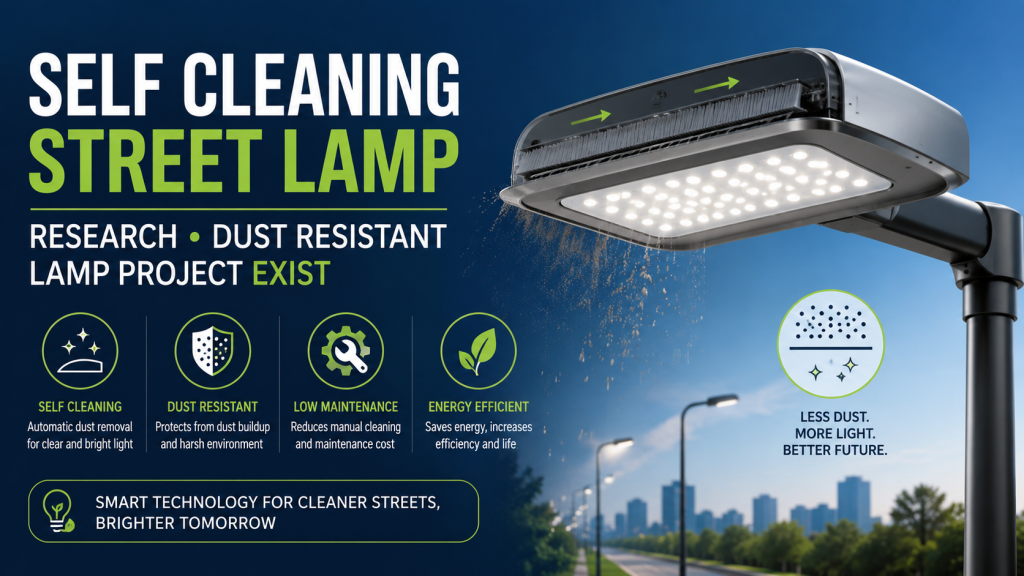
Yes, self cleaning street lamp research dust resistant lamp projects exist. Researchers, universities, and manufacturers have developed working prototypes and commercial systems that reduce dust buildup and lower maintenance needs.
What Is a Self Cleaning Dust Resistant Street Lamp?
A self cleaning dust resistant street lamp is an outdoor lighting system designed to keep its important surfaces clean with little or no manual work.
The main purpose is to maintain steady light output while reducing maintenance costs. These lamps are especially useful in areas with heavy dust, sand, pollution, or industrial particles.
A typical system protects:
- Lamp lenses
- Solar panels
- Sensors
- Camera modules
- Protective covers
The design helps prevent dirt from reducing lighting performance.
Does the Research Project Exist?
Yes. Many research projects have already confirmed that self cleaning and dust resistant street lamps are practical.
Research is being carried out by:
- Universities
- Government research organizations
- Private lighting companies
- Smart city development programs
Several companies also sell commercial products that use self cleaning or dust resistant technology, especially for solar powered street lighting in dusty regions.
The Flying Elephant Memoirs of an Olympic Champion | An Inspiring Olympic Journey
The Flying Elephant Memoirs of an Olympic Champion is a sports memoir by Olympic volleyball champion Alexander Savin that shares his experiences of elite…

Why Dust Is a Major Problem
Dust affects both traditional and solar street lamps.
Common problems include:
| Problem | Effect |
|---|---|
| Dust on lamp cover | Reduces brightness |
| Dust on solar panel | Lowers charging efficiency |
| Dirt inside housing | Can damage internal parts |
| Frequent cleaning | Increases maintenance cost |
| Poor lighting | Reduces road safety |
Even a thin layer of dust can reduce lighting performance over time.
Main Goals of These Research Projects
Researchers focus on several important objectives.
| Goal | Purpose |
|---|---|
| Reduce dust buildup | Keep lighting clear |
| Improve energy efficiency | Increase power savings |
| Lower maintenance | Reduce cleaning visits |
| Extend equipment life | Protect LEDs and electronics |
| Support smart cities | Improve infrastructure reliability |
How Self Cleaning Street Lamps Work
Different technologies are used depending on the project design.
Mechanical Cleaning Systems
This is one of the most common methods.
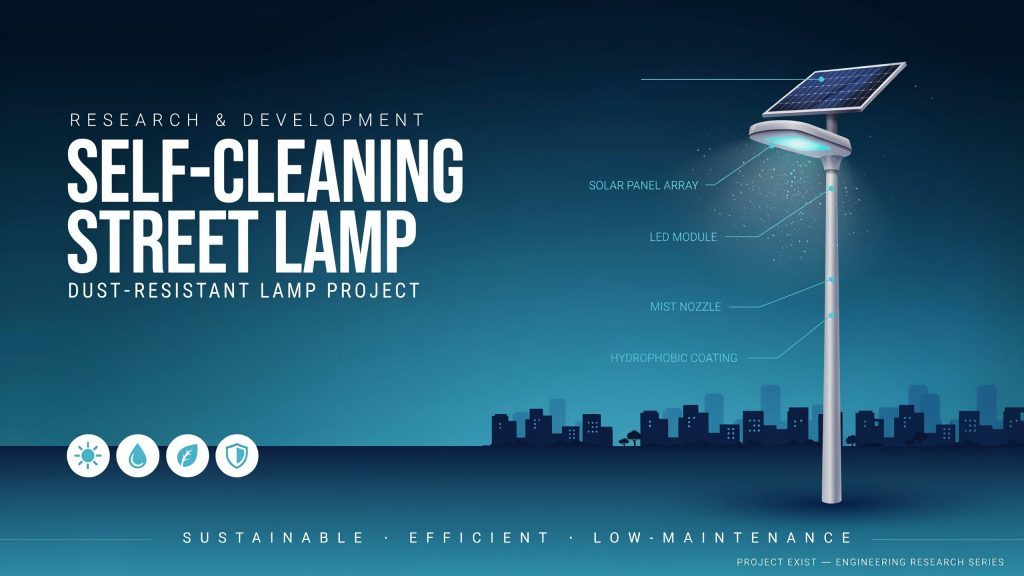
Small brushes or soft wipers automatically clean the lamp surface or solar panel at scheduled times.
Benefits include:
- High cleaning efficiency
- Simple operation
- Proven performance
Hydrophobic Surface Coatings
Special coatings reduce the ability of dust and water to stick to the surface.
Rain or wind can remove loose particles more easily.
Advantages include:
- Less dirt accumulation
- Better light transmission
- Lower cleaning frequency
Photocatalytic Coatings
Some research uses titanium dioxide coatings.
These coatings help break down organic dirt when exposed to sunlight. Water can then wash away the remaining particles more easily.
Electrostatic Dust Removal
Some advanced systems use electric fields to move dust away from glass surfaces.
This technology contains very few moving parts and is being studied for future outdoor lighting systems.
Smart Sensors
Modern research also includes sensors that monitor:
- Dust levels
- Light output
- Solar charging performance
- System efficiency
The cleaning process starts automatically when performance falls below a preset level.
Dust Resistant Design Features
Cleaning systems alone are not enough.
Modern projects also improve the overall lamp design.
Common features include:
| Feature | Benefit |
|---|---|
| Sealed housing | Prevents dust from entering |
| High IP rating | Protects against dust and water |
| Corrosion resistant materials | Longer service life |
| Smooth outer surface | Reduces dust buildup |
| Strong protective glass | Better durability |
These features improve reliability in difficult outdoor environments.
Applications
Self cleaning dust resistant street lamps are useful in many locations.
They are commonly considered for:
- Desert highways
- Industrial zones
- Mining areas
- Coastal roads
- Smart cities
- Rural roads
- Solar powered lighting systems
- Airports
- Large campuses
These locations often experience heavy dust or limited maintenance access.
Advantages
Self cleaning street lamps provide several important benefits.
| Advantage | Description |
|---|---|
| Better lighting | Cleaner lenses maintain brightness |
| Lower maintenance | Fewer manual cleaning visits |
| Energy savings | Solar panels work more efficiently |
| Longer lifespan | Less dirt protects equipment |
| Lower operating cost | Reduced labor and service expenses |
| Improved public safety | More consistent illumination |
Current Challenges
Although the technology is improving, some challenges remain.
These include:
- Higher installation cost
- Wear of moving mechanical parts
- Limited long term field data in some climates
- Different dust types requiring different cleaning methods
- Durability of advanced coatings over many years
Researchers continue working to improve these areas.
Traditional Street Lamps vs Self Cleaning Street Lamps
| Feature | Traditional Lamp | Self Cleaning Lamp |
|---|---|---|
| Cleaning | Manual | Automatic or reduced manual work |
| Dust protection | Basic | Advanced |
| Maintenance cost | Higher | Lower |
| Light consistency | Reduces over time | Remains more stable |
| Solar efficiency | Drops with dust | Better maintained |
| Smart monitoring | Usually unavailable | Often included |
Technologies Used in Research
Many engineering fields contribute to these projects.
Researchers commonly use:
- Material science
- Surface engineering
- Mechanical engineering
- Electronics
- Embedded systems
- Internet of Things monitoring
- Environmental testing
- LED lighting technology
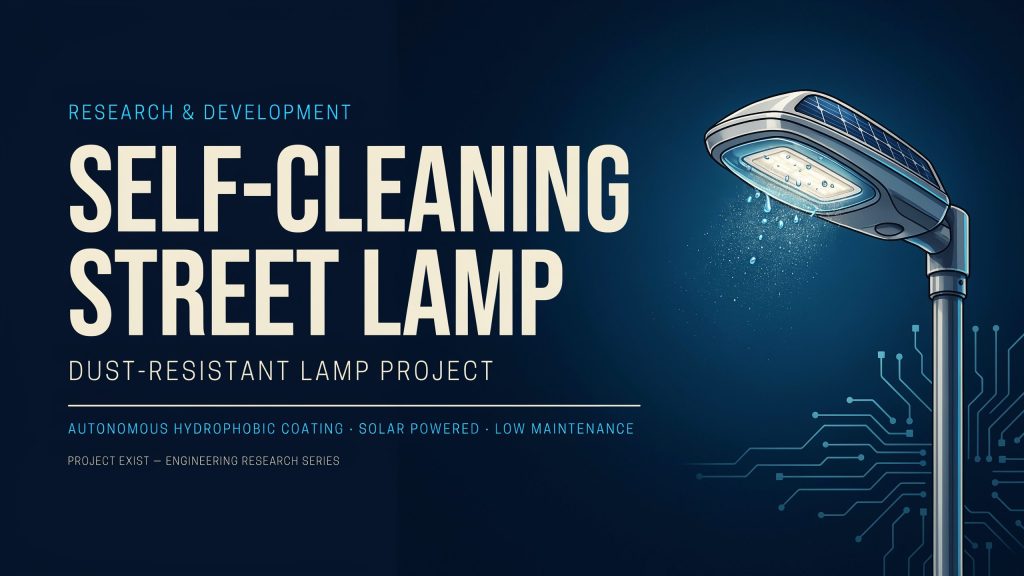
Combining these technologies creates reliable outdoor lighting systems.
Ohio Champion Trees Delaware County USD Lewis Center | Locations, Species, and Facts
Ohio’s Champion Tree Program is a voluntary state effort that finds and measures the largest known trees of each species. ODNR says Ohio is…

Future Development
Research continues to improve self cleaning street lamps.
Future work focuses on:
- Longer lasting protective coatings
- Lower power cleaning systems
- Artificial intelligence for maintenance scheduling
- Better dust sensors
- More efficient solar charging
- Stronger weather resistance
- Lower manufacturing costs
As these improvements continue, self cleaning and dust resistant lighting systems are expected to become more common in modern infrastructure.
